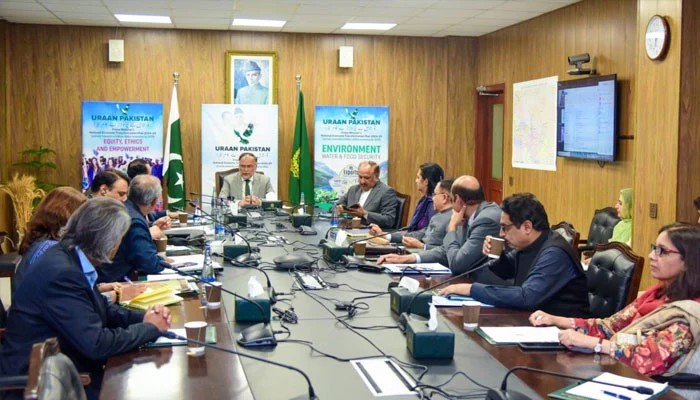
Minister for Planning Ahsan Iqbal on Thursday led the multi-party consultative process on the much-awaited Civil Service Reforms in Pakistan, in which the government finalised a plan to implement specialised recruitment through either cluster-based examinations or separate exams for each occupational group, with the CSS examination and an optional medium of English or Urdu.
It proposes Urdu/English optional medium for compulsory CSS papers; all-Urdu attempt option, fully digitise the CSS exam process; 6-month recruitment cycle, scholarships for top-25 university admits for executive leadership training abroad for senior officers, establish National University of Public Administration (NUPA), merging NIMs/training institutes, revise performance evaluation reports (PERs) outcomes, attributes, competency, integrity, add grading system and several others.
It also proposes National Executive Service (NES) for Post-Based Specialized Recruitment for Grade 20 and above positions of all services at the federal level (excluding Police and Foreign Service) through an open and contract-based appointment against pre-determined KPIs for a period of five years. The Special Professional Pay Scale may be offered to NES. All candidates from the private sector, academia, and government will be eligible to compete.
Percentage of existing positions for NES will be decided by the prime minister. Screening test by FPSC will be followed by a Competency Based Assessment including interview. The remaining positions will be filled through promotion on the basis of performance in training and work. Officers who are superseded twice will be retired at the service of 25 years with all entitled perks. The existing passing threshold in CSS exams may be increased from 33 percent to 40 percent without negative marking and may include GRE/SAT styled question to assess analytical and logical reasoning skills. The unfilled quota seats for Balochistan, Sindh, minorities, and women through affirmative actions, e.g., additional attempts be allowed.
Consensus was reached on 43 of the 46 recommendations. Ahsan Iqbal said the committee had studied civil service systems in Australia, New Zealand, Malaysia and the United Kingdom, particularly countries with Commonwealth traditions and parliamentary systems. He said these comparisons demonstrated that modern public administrations had become considerably more open, specialised and merit-driven.