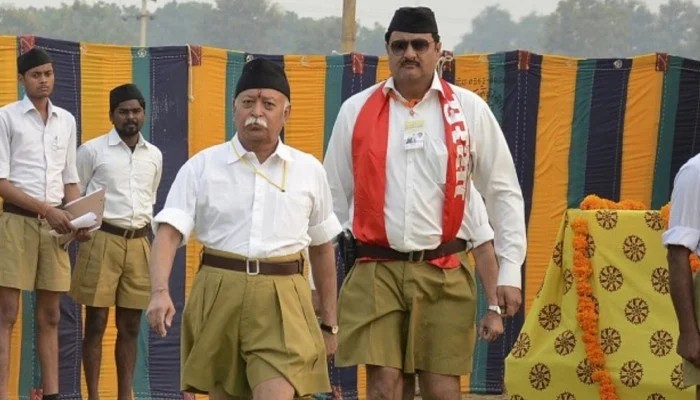
A recent statement by right-wing Hindu nationalist Rashtriya Swayamsevak Sangh (RSS) chief Mohan Bhagwat during his visit to the US has created extensive debate in India. Addressing an interfaith event in New York, Bhagwat stated that if any Hindu thinks there should be no Muslims in India, he will not remain Hindu. He stressed that there is no fundamental difference between human beings, regardless of their religious identity.
Bhagwat's statement has attracted international attention because it comes at a time when India's religious minorities have increasingly found themselves at the centre of socio-political isolation. Over the past decade, the extremist agenda of Hindutva has been strengthened under the Modi government, while some extremist voices have openly spoken about excluding Muslims from mainstream Indian society. His remarks also reminded observers of the regional political atmosphere when the Indian government pursued its hard-line agenda and revoked the special status of Occupied Kashmir, dealing a serious blow to India's long-standing secular identity.
The term 'Hindutva' has nothing to do with the Hindu religion. It has never been found in any ancient epic religious literature, including the Vedas, Ramayana, Mahabharata, and Bhagavad Gita. The religion followed by Hindus worldwide is known as Hinduism, Hindu Dharma, or Sanatan Dharma. Like other highly respected religions, Hinduism teaches compassion, humanity, service, and brotherhood, focusing on becoming good human beings to help others.
The slogan of 'Hindutva' was first raised during the British Raj in India, an era when British imperialism was promoting nationalism to design a new world order through the familiar policy of 'divide and rule'. The term was used to promote religious extremism and nationalism following the footsteps of Nazi Germany. On behalf of the Pakistan Hindu Council, leaders have welcomed Bhagwat's statement, noting that real credibility will depend on how it is translated into equal citizenship and protection for vulnerable minorities.