
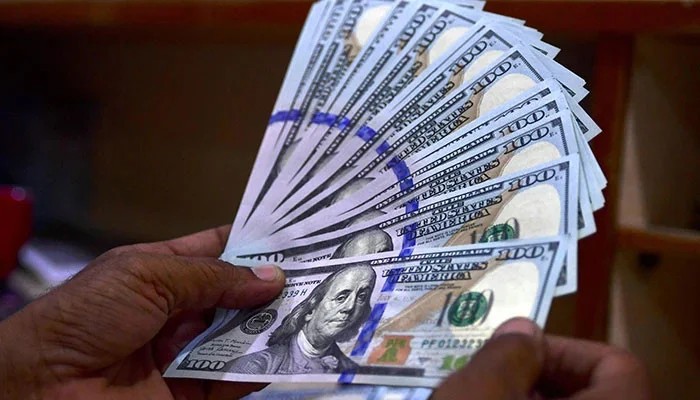
Pakistan has raised $3 billion from international markets: $1.75 billion for five-and-a-half years at 7.5 percent, and $1.25 billion for 10 years at 7.9 percent. This is Pakistan's largest-ever international capital-market transaction. What does that really mean? The biggest story is not the $3 billion. The biggest story is 10 years. Yes, international investors are willing to take Pakistan's sovereign risk not for one year. Not for three years. Remember: In sovereign finance, tenor is confidence. Look closer: That is the signal.
A few years ago, Pakistan could not borrow normally from international capital markets. Pakistan depended on the بین الاقوامی مالیاتی فنڈ (IMF), Saudi deposits, Chinese rollover, UAE support, and multilateral loans. Look even closer: Now private institutional investors are willing to write cheques.
Here's the real transformation: A few years ago, the question was: Will they lend to Pakistan? Today, the question is: At what price? Fact: Almost $6 billion of orders came for $3 billion of bonds. What does that really mean? Answer: Foreign investors have reopened the door to Pakistan.
As of August 21, اسٹیٹ بینک آف پاکستان (State Bank of Pakistan (SBP)) reserves were about $17 billion. A $3 billion inflow is therefore equivalent to roughly 18 per cent of existing اسٹیٹ بینک آف پاکستان (State Bank of Pakistan (SBP)) reserves. Yes, Pakistan will be paying $230 million a year in coupons on these two bonds alone.
This is where we need to make an important distinction: market access does not mean debt sustainability. This is not cheap money. Look at the risk premium: The US 10-year Treasury yield has recently been around 4.8 per cent, so Pakistan is paying roughly three percentage points over the US Treasury.
In 2021, Pakistan's risk premium was around 5.65 percentage points. What does that really mean? Two things: nominal borrowing cost is high; Pakistan's risk premium has substantially improved.
Here's perhaps the most underappreciated point: Pakistan is replacing rollover debt with fixed-maturity debt.
So what does this mean for ordinary Pakistanis? Fewer dollar crises. Less pressure on the rupee. Less risk of another inflation shock. But debt is still debt. It buys time, not prosperity.
Three billion dollars is money. Ten years is confidence. What Pakistan does with that confidence is what really matters.
The writer is an Islamabad-based columnist.