
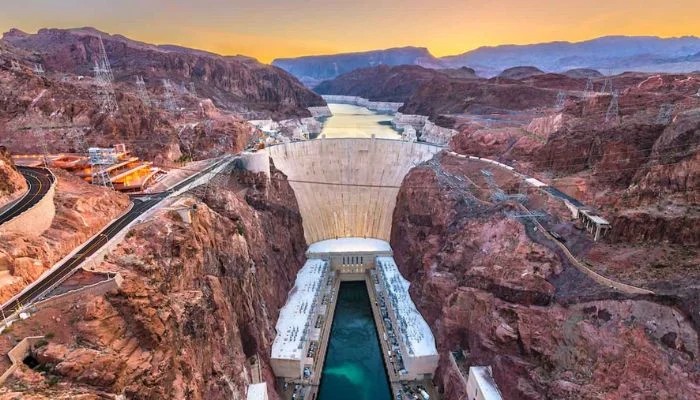
The Hoover Dam is facing a growing threat as Lake Mead, the reservoir behind it, has fallen to its lowest level since the lake was created nearly 90 years ago. Lake Mead dropped to about 1,040.4 feet above sea level earlier this month, slipping below its previous record low set in 2022. The reservoir is now sitting at only around a quarter of its full capacity. Lake Mead supplies water to millions of people across the American Southwest, while the water flowing through Hoover Dam also drives its hydroelectric turbines. The lower the lake falls, the harder it becomes for the dam to generate electricity.
The situation becomes considerably more serious if the lake drops below 1,035 feet. At that point, Hoover Dam could see major reductions in its available hydropower capacity, according to water experts. That level is now only around five feet below where Lake Mead currently stands and the water crisis is already forcing governments to take action. Federal officials have finalized a plan requiring Arizona, California and Nevada to make major reductions in their Colorado River water use beginning in 2027.
The three states will collectively cut their annual use by 1.25 million acre-feet, while Mexico will also reduce its allocation under a separate agreement. The cuts come after years of drought, low snowpack and heavy demand placed increasing pressure on the Colorado River system. The problem is particularly serious because Lake Mead and Lake Powell are the two largest reservoirs in the Colorado River system, which supports roughly 40 million people across the western US.
There is still a significant amount of water above the level where Hoover Dam would completely stop producing electricity, so the dam is not about to suddenly go dry. But the shrinking margin is becoming harder to ignore.