
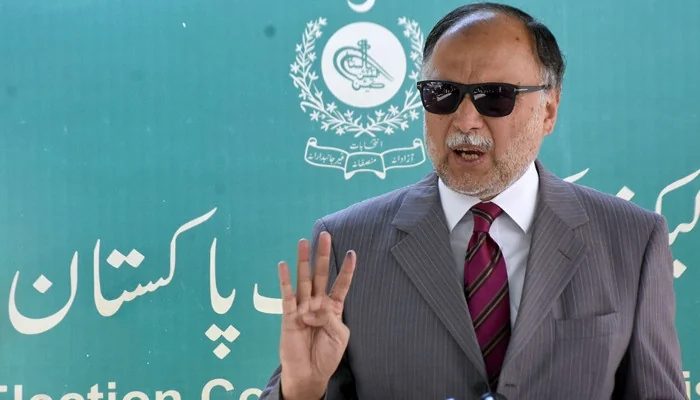
Minister for Planning Ahsan Iqbal on Thursday said the government was not drafting the 28th Constitutional Amendment for creation of more provinces and underscored the need for establishing local governments to improve service delivery at the grassroots level. Replying to journalists' queries during the launch of the monthly development update, Ahsan said the petroleum levy could not be abolished as macroeconomic stability could not be put at stake, as was done by the Pakistan Tehreek-e-Insaf (PTI) by reducing petroleum and electricity prices in the past.
He said the government had constituted a high-powered committee under Deputy Prime Minister Ishaq Dar in order to negotiate with Jamaat-e-Islami to rationalise the petroleum levy from the next budget. "The Human Development Index (HDI) has significantly dropped from 2000-2001 to 2024-25 even though the provinces got an increased share under the NFC Award.
There is no other choice but to put in place local governments for improving service delivery," he said. Sharing the country's economic and development performance for the first quarter of FY2026-27, the minister said merchandise exports increased by 7.7 percent to $8.5 billion during July-September, compared with $7.9 billion in the corresponding period last year.
Combined exports of goods and services rose by 11 percent to $11.2 billion, supported by 22.8 percent growth in services exports. ICT exports reached $1.2 billion, while food exports grew by 17.1 percent, petroleum products by 44.5 percent, engineering goods by 4.9 percent, and textiles by 2.5 percent.
He said Pakistan must develop an export-oriented culture across the country by identifying competitive products in every province and district. The minister said he had written to provincial chief ministers to encourage the establishment of provincial export boards and the preparation of district-level export development plans.
These initiatives would identify opportunities in agriculture, handicrafts, engineering, technology, and other sectors, strengthen domestic value chains, and connect local producers with international markets. Imports of goods rose by 14.3 percent to $17.8 billion, while combined imports of goods and services increased by 14.6 percent to $21.3 billion.
Machinery imports grew by 10.7 percent and raw material imports by 28 percent, reflecting increased demand for industrial inputs and production capacity across the national economy.