
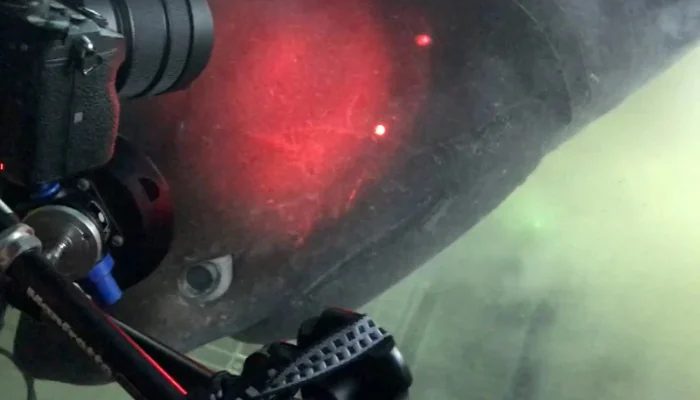
Scientists aboard OceanX's submersible Nadir met a 16‑ to 17‑foot bluntnose sixgill shark on June 29, 2019, 1,700 feet below the Atlantic near the Bahamas.
- Video resurfaced on November 22, 2026, showing the shark eye‑to‑eye with researchers.
- Gavin Naylor attached a satellite tag to a sixgill shark at record depth.
- The encounter occurred during a deep‑sea expedition in Exuma Sound aboard the vessel Alucia.
Encounter Details
On Sunday, November 22, 2026, a viral clip circulated online, revealing a massive deep‑sea shark approaching the viewing window of OceanX's three‑person submersible Nadir. The footage, recorded on June 29, 2019, showed the shark swimming slowly around the vessel, then pressing its snout against the glass. The animal was a bluntnose sixgill, a species that can reach up to 20 feet in length. Researchers estimated the female in the video measured 16 to 17 feet.
Tagging Milestone
The encounter was part of a broader expedition to attach a satellite tracking tag to a sixgill shark without hauling it to the surface. OceanX scientists had travelled to Exuma Sound in the Bahamas aboard the research vessel Alucia, hoping to break new ground. After several failed attempts caused by bad weather and equipment issues, the team succeeded on June 29, 2019. Scientist Gavin Naylor secured a satellite tag on a male sixgill shark more than 1,700 feet underwater. The Florida Museum of Natural History first reported the event on July 15, 2019. It marked the first time scientists had tagged a sixgill shark at such depth in its natural habitat.
Scientific Significance
Bluntnose sixgill sharks are among the largest predatory sharks in the ocean, yet most people never see them because they spend the majority of their lives hundreds or thousands of feet below the surface. These sharks resemble species that swam the oceans roughly 200 million years ago. The successful tagging effort provides new data on the movements and behavior of these elusive predators, offering insights into deep‑sea ecosystems and aiding conservation efforts. The viral video has drawn public attention to the species and the challenges of studying deep‑water marine life.