
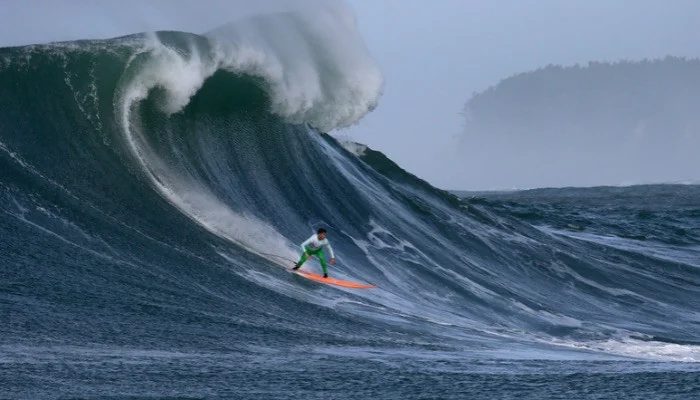
Big wave surfers rushed to Northern California on Saturday, November 14, 2026, as a massive Pacific swell brought waves of up to 60 feet to Mavericks.
- A hurricane-strength low-pressure system generated a massive Pacific swell.
- Waves reached 40 to 50 feet at Mavericks with even larger sets possible.
- The National Weather Service warned of a very high risk of drowning.
Surfers from around the world traveled to the legendary break near Half Moon Bay for the arrival of the swell. Surfline models showed the swell peaking on Saturday morning at 18 feet with a 19-second period. Meanwhile, the National Weather Service issued an extreme weather warning for the Pacific Coast. Forecasters predicted breaking waves of 25 to 35 feet along the general Bay Area coast and 40 to 50 feet at exposed spots like Mavericks.
The powerful swell originated from a hurricane-strength low-pressure system churning hundreds of miles offshore. National Weather Service meteorologist Roger Gass explained the mechanics of the storm to SFGATE. He stated that the winds associated with the low-pressure system generated the swell locally. He added that as the swell traveled toward the West Coast, it built and continued to gain in strength.
Athletes from Hawaii and as far as Biarritz, France, rearranged their travel plans to catch the monster waves. At the same time, demand for Jet Skis, which are essential equipment for tow-in surfing at Mavericks, surged significantly across the region.
Despite the excitement among athletes, local authorities strongly urged caution. Officials noted that dangerous rip currents and sneak waves posed a severe risk to anyone near the shoreline. Furthermore, higher sea levels linked to a developing El Niño threatened to worsen coastal flooding during the high surf event. The weather service issued a stern warning regarding the conditions, stating that the risk of drowning was very high over the weekend and explicitly instructing people not to go into the water.