
Harvard astrophysicist Avi Loeb stated that an object orbiting the Sun for decades could actually be a lost Soviet spacecraft.
- Object 1998 KY26 measures eleven metres across.
- Researchers questioned the dark comet theory.
- Japan plans a spacecraft rendezvous by 2031.
Object 1998 KY26 analysis
The object, known as 1998 KY26, measures approximately eleven metres or thirty-six feet across and completes a rotation every 5.35 minutes. Scientists previously felt puzzled by its unusual acceleration, which the gravitational pull of the Sun and planets alone cannot explain. Researchers earlier suspected the object was a dark comet, meaning it could release gas without producing a visible tail. A new study by aerospace engineers Korbin Hansen and Masatoshi Hirabayashi at the Georgia Institute of Technology cast doubt on that explanation. Published online in the journal Icarus, the study found that the object is too warm to retain the water ice needed to produce such an acceleration.
Harvard astrophysicist identification
Harvard astrophysicist Avi Loeb believes the object could be Phobos 1, a Soviet spacecraft launched on July 7, 1988, to study Mars and its moons. The spacecraft went silent less than two months after its launch when a faulty command sent from Earth caused it to shut down. In a separate study, Loeb and his colleagues found that the object brightness, rapid rotation and orbital characteristics were consistent with those of the missing spacecraft. They suggested that sunlight exerting pressure on the spacecraft metallic body and solar panels could explain its unusual movements. The object is expected to pass within 32 million miles of Earth in 2028 and approximately 10 million miles in 2039.
Hayabusa2 rendezvous mission
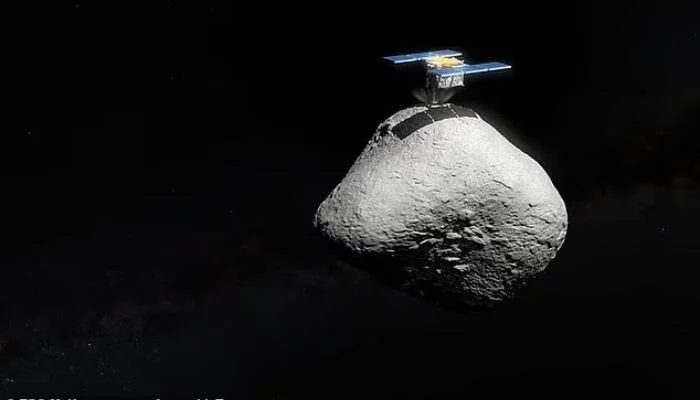
Scientists may not have to wait until 2028 to establish its true identity. Japan Hayabusa2 spacecraft is scheduled to rendezvous with the mysterious object in July 2031. Loeb predicted that the Japanese spacecraft cameras could end up finding a Soviet-made machine rather than a space rock. His theory, however, remains unproven.