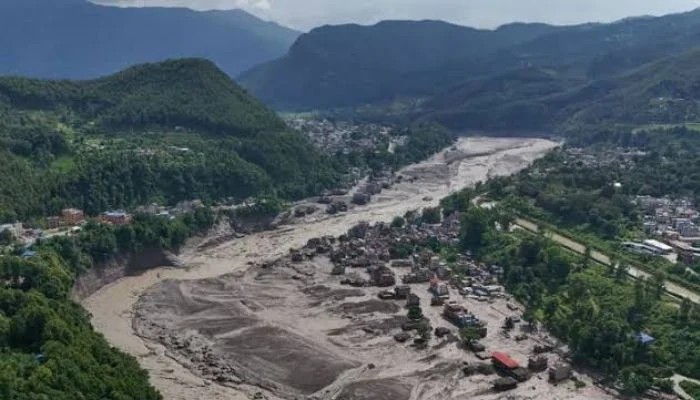
Around 31 people have been killed, and hundreds of others are missing as massive flash floods and mudslides swept through communities along the Nepal-Tibet border on Wednesday, August 26. The authorities confirmed that foreign tourists are among the missing. The disaster struck Nepal's mountains in Rasuwa and Nuwakot districts, destroying settlements, bridges, roads, and hydropower infrastructure.
The government said that 93 people had also been wounded during the frantic rescue efforts. According to Nepal's Tourism Ministry, about 400 tourists have not been found yet; some 100 of them are Indian, 12 are British, 17 are Malaysian, four are South African, and a few others are from the US, Australia, and Holland. Most of them were heading towards Mount Kailash in Tibet and northern Nepal.
Foreign Minister of Nepal, Shishir Khanal, said that the first information indicates that an earthquake triggered a huge avalanche or landslide and caused an obstruction in the Bhote Koshi River, which resulted in a sudden flood flow. The Nepali Army has rescued around 88 people and deployed 15 helicopters, although high floodwaters and difficult terrain hampered efforts. At least 60 workers at an under-construction hydropower project were also reported missing.
However, on the other side of the border in Tibet, a landslide took place at the Gyirong border checkpoint, which claimed many lives according to Chinese state media. An order for a full-scale rescue mission was issued by Chinese President Xi Jinping. This natural calamity has also affected the trade and tourism link connecting Nepal to China as vital infrastructure has been damaged. India has provided humanitarian help while its embassy in Nepal is assisting with rescue operations for its citizens.