
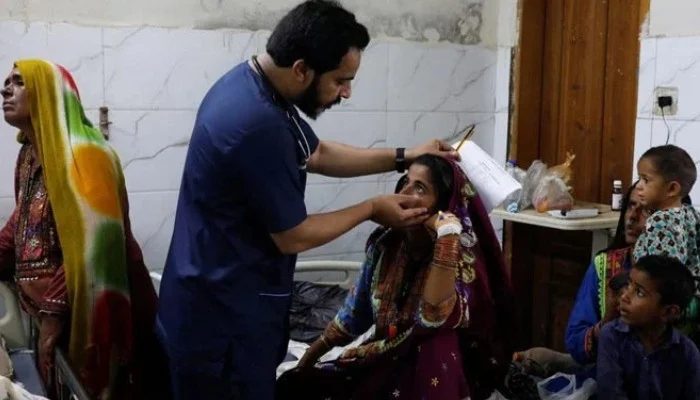
Pakistan has ranked second-worst in South Asia on the Global Hunger Index (GHI) 2026, behind only Afghanistan, highlighting the country's worsening food insecurity and malnutrition challenges. "With a 2026 Global Hunger Index score of 25.5, Pakistan has a serious level of hunger," according to the report published on the GHI website.
Only Afghanistan has a higher score than Pakistan in the South Asia region, with a score of 28.6. Across South Asia, the regional GHI score is 23.5, while the global score is 18.1.
Pakistan's score has, however, fallen from 36.2 in 2000 to 25.5 in 2026, showing substantial long-term improvement. The country ranks 106th out of 122 countries globally with sufficient data to calculate GHI 2026 scores.
Pakistan's GHI score is based on the value of undernourishment, child stunting, child wasting, and child mortality. According to the report, 16.1% of Pakistan's population is malnourished, while 33.6% of its children under five are stunted.
It showed that 9.8% of the children are wasted, while 5.6% of the children in the country die before the age of five. The report comes just days after the International Monetary Fund (IMF) projected the country's inflation rate to rise to 9.9% in the fiscal year 2026-27.
In its World Economic Outlook (WEO) report released on Tuesday, the lender projected inflation to increase to 9.9% in the current fiscal year from 7.1% in 2025-26. Economic analysts suggest that the combination of high inflation and food insecurity poses a significant threat to the country's social stability.
The government has been urged to implement targeted food subsidies and improve agricultural productivity to mitigate these risks. Furthermore, the report emphasizes that while long-term trends show improvement, the current economic climate threatens to reverse these gains.
Addressing the root causes of malnutrition, including poverty and lack of access to clean water, remains a critical challenge for policymakers. The GHI serves as a vital tool for tracking hunger globally and identifying regions that require urgent humanitarian and policy interventions.
Pakistan's position highlights the need for a comprehensive strategy to address the nutritional needs of its most vulnerable populations. As the country navigates these economic hurdles, the focus on food security will likely remain a central theme in upcoming policy discussions.
The international community continues to monitor these indicators closely to provide necessary support where required. Ultimately, the path to reducing hunger in Pakistan requires sustained investment in health, education, and economic reform to ensure that all citizens have access to adequate and nutritious food.