'From Reko Diq to Gilgit‑Baltistan, a clear policy push and strong state backing are turning geological promise into investment reality' when global mining leaders gathered in Islamabad for the Pakistan Minerals Investment Forum 2026, the message from the podium was striking for its confidence. Pakistan, they said, is no longer a country that merely holds mineral wealth beneath its mountains and deserts. It is fast becoming a country that is ready to develop that wealth with clear rules, secure operating conditions and a government determined to turn geology into prosperity.
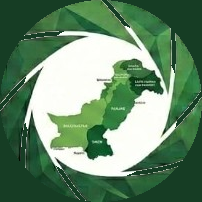
- Pakistan's accelerated geological mapping programme at a 1:50,000 scale is revealing copper and gold in Balochistan, lithium, tin and tungsten in Gilgit‑Baltistan, and antimony and base metals in Khyber Pakhtunkhwa.
- More than 40 mineral exploration licences have recently been granted in the Chagai and Khuzdar districts of Balochistan, indicating growing private‑sector participation in strategic and critical minerals.
- The government's stated aim is to offer clear and fair fiscal terms to every responsible company without case‑by‑case negotiations, emphasizing predictability for international investors.
Market Opportunities
The timing could not be better. The world is entering an era in which critical metals are replacing crude oil as the strategic commodity of the century. Electric vehicles, renewable energy grids, smartphones, artificial intelligence and the vast data centres that power it all depend on copper and a range of critical elements.
Speaking at the forum, the head of Ivanhoe Atlantic, an American mining company, observed that to sustain 3 percent global GDP growth, the mining industry will have to produce as much copper in the next 18 years as humanity has mined in the 10,000 years since the age of Mohenjo‑daro. Meeting that demand, he noted, would require six new Reko Diq‑scale, Tier‑1 mines to come on stream every single year.
That is why copper prices have reached record highs, and why investors are turning their attention to new frontiers. As average ore grades in established producers such as Chile decline sharply, Balochistan, where the copper‑gold geology is comparable to the great Andean belt, has emerged as one of the most promising destinations on earth. Pakistan's mineral endowment is remarkable in both scale and diversity.
It ranges from iron ore capable of feeding a modern steel industry to copper often called the king of metals and dozens of critical elements used in modern electronics. The Ivanhoe Atlantic leadership told the forum that Pakistan combines favourable geology and climate with one of the world's youngest populations, a combination that should make the country a global leader in mineral development. The government's accelerated geological mapping programme, including surveys at a scale of 1:50,000, is steadily revealing this potential: copper and gold in Balochistan; lithium, tin and tungsten in Gilgit‑Baltistan; and antimony and base metals in Khyber Pakhtunkhwa.
Interest is already translating into activity on the ground. More than 40 mineral exploration licences have recently been granted in the Chagai and Khuzdar districts of Balochistan, reflecting growing private‑sector participation in strategic and critical minerals. What sets Pakistan's current approach apart is its emphasis on predictability.
Policy Framework
Investors have long cited uncertainty as the single greatest barrier to long‑term mining commitments, which typically span decades. The government has responded directly. Its stated aim is to offer clear and fair fiscal terms to every responsible company, without the need for case‑by‑case negotiations.
This shift towards a transparent, rules‑based regime is precisely what international capital looks for. The state is also tackling the information gap that raises exploration risk. Decades of geological records are being digitised to give investors easy access to reliable data, reduce uncertainty and support informed decisions.
Exploration capacity is being strengthened through modern geochemical and geophysical surveys, exploratory drilling, advanced laboratories and international technical cooperation, including the UK‑Pakistan Geoscience Capacity Building Programme. Facilitation does not end at policy. Officials made clear that a dedicated team stands ready to assist investors with technical discussions, site visits and project evaluations and that Pakistan intends to earn investor confidence through practical follow‑up and implementation long after the forum has concluded.
Infrastructure and Institutions
The forum itself, organised by the Government of Pakistan and endorsed by the Special Investment Facilitation Council (SIFC), is a reflection of this single‑window, whole‑of‑government approach. Minerals are only as valuable as the routes that carry them to market. Pakistan is investing in exactly these links.
Road connectivity is being developed between Chagai's mineral‑rich belt and Gwadar Port. The planned upgrade of the Rohri‑Nok Kundi railway corridor, connectivity to Port Qasim and infrastructure development around Reko Diq will together connect the country's mineral regions with global markets. Equally important is the move up the value chain.
For too long, Pakistan exported raw ore and concentrates while importing finished products. The government is now advancing copper smelting and refining so that more of the value is captured at home. The broader objective is an integrated, competitive and sustainable mineral industry, spanning processing, refining, downstream manufacturing, technology transfer and integration into global supply chains.
Behind this momentum lies sustained leadership at the highest levels of the state. Field Marshal Syed Asim Munir has played a central role in placing the mineral sector at the heart of Pakistan's economic revival. Through the SIFC framework, he has helped bring civil and military institutions together behind a common goal, cutting through bureaucratic delays and giving foreign investors the assurance of continuity that long‑term projects demand. His contribution was acknowledged openly at the forum. The chief of Ivanhoe Atlantic expressed deep appreciation for the support his company had received from Field Marshal Asim Munir, and also commended the Government of Pakistan for its efforts to bring peace to the region. Crucially, the state has committed to ensuring security, safety and trained human resources for uninterrupted mining operations. For investors weighing projects in remote regions, this assurance is often the deciding factor and it is one that only strong, coordinated nation.