
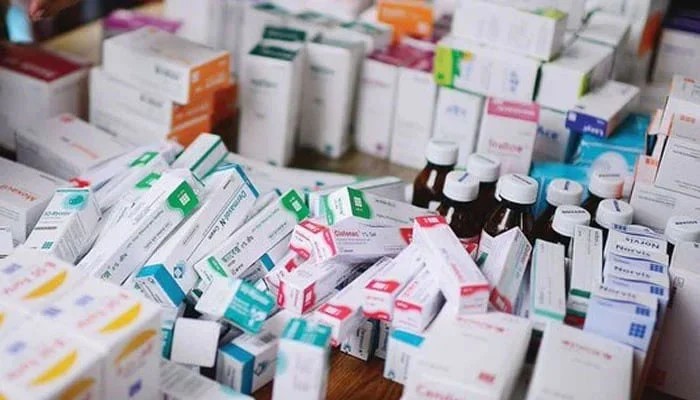
Patients in Pakistan are being given more than double the number of medicines recommended by the World Health Organization (WHO) in a single prescription, and only one in four medicines is being prescribed by its generic name, a new study has found.
The study was carried out by researchers at the Health Services Academy (HSA), Islamabad, and published in the journal Discover Public Health. It reviewed 15 research papers on prescribing practices at hospitals and clinics across Punjab, Khyber Pakhtunkhwa, Sindh, Balochistan and Islamabad, covering the years 2013 to 2024, to find out whether doctors in Pakistan are following WHO prescribing standards.
On average, patients were given 4.2 medicines in one prescription, against a WHO limit of 1.6 to 1.8. In one tertiary hospital in Peshawar, the average was 10.56 medicines per prescription, nearly six times the recommended number. Even the lowest figure recorded among the 15 studies, from an emergency department in Bahawalpur, was higher than the WHO limit.
Only about 25 per cent of medicines were prescribed by generic name, against a WHO target of 100 per cent. In some hospitals, generic prescribing was close to zero, and only two of the 15 studies found generic prescribing above 50 per cent.
Antibiotics were present in 45 per cent of prescriptions on average, against a WHO limit of 20 to 26.8 per cent. Injections were given in over 27 per cent of prescriptions, also higher than the WHO limit of 13.4 to 24.1 per cent, though this varied sharply between hospitals, from zero to as high as 98 per cent. Only 72 per cent of medicines prescribed came from Pakistan's essential medicines list, which should ideally be followed 100 per cent of the time.
Prof Shahzad Ali Khan, Vice Chancellor of the Health Services Academy and one of the study's authors, said the pattern was found across every type of healthcare facility studied, from small primary care clinics to big teaching hospitals. "This is not the problem of one hospital or one city. It is happening across the country, at every level of healthcare," Prof Khan said.
He said doctors often prescribe antibiotics and injections without proper testing, partly because patients ask for them, believing they act faster. "Patients think an injection or an antibiotic will cure them quickly. Doctors, under pressure and short of time, often give in," he said.
The findings add to growing concern over antibiotic misuse in Pakistan. Federal health authorities said earlier this year that antimicrobial resistance in priority bacteria and fungi could kill more than 262,000 people in Pakistan over the next 25 years. Pakistan has since prepared a national priority pathogen list to guide hospitals on which drug-resistant infections need the most attention. The Drug Regulatory Authority of Pakistan (DRAP) had earlier directed that antibiotics only be sold against a prescription from a registered doctor, after data showed that antibiotics worth Rs135 billion were consumed in a single year, with 70 to 80 per cent of that used for illnesses that did not need antibiotics at all.
Prof Shahzad Ali Khan said low use of generic medicines was linked partly to marketing by pharmaceutical companies, and partly to a belief among doctors and patients that generic medicines do not work as well as branded ones, even though there is no proven difference in quality. He said Pakistan already has prescribing guidelines in place, but they are rarely enforced.