
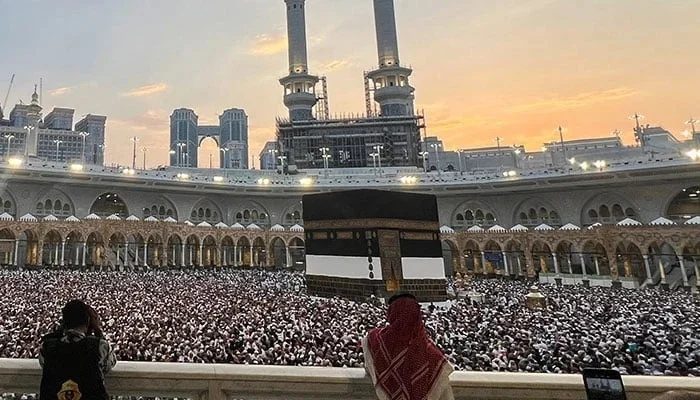
Prime Minister Shehbaz Sharif has officially approved a proposal to introduce a Shariah-compliant, interest-free Haj savings plan for Pakistani pilgrims. This initiative is designed to facilitate advance financial planning for citizens intending to perform the annual pilgrimage, easing the burden of lump-sum payments.
A joint summary regarding this financial scheme was submitted to the Prime Minister by the Ministry of Religious Affairs and Interfaith Harmony, the Ministry of Finance, and the Central Directorate of National Savings. The government aims to encourage systematic saving habits among the public to ensure that financial constraints do not hinder the fulfillment of religious obligations.
Following the formal approval, these three key institutions will work in coordination to launch the savings plan. The program is structured to enable intending pilgrims to accumulate funds gradually, making the pilgrimage more accessible to the middle and lower-income segments of society.
According to official details, a high-level meeting was held at the Ministry of Religious Affairs on Friday to discuss the implementation framework. The session was chaired by Federal Secretary Abrar Ahmed Mirza, who emphasized the need for a transparent and user-friendly system.
Representatives from the Ministry of Finance, the Central Directorate of National Savings, and the Haj Wing participated in the deliberations. The committee reviewed the potential impact of the plan on national savings and the overall convenience for the pilgrims.
The authorities confirmed that the scheme will be fully compliant with Islamic financial principles, ensuring that no interest is accrued or charged. This aligns with the government's broader policy of promoting Shariah-compliant banking and financial products across the country.
Regarding the operational aspects, officials stated that the application procedure, eligibility criteria, and the duration of the savings cycle are currently being finalized. The government intends to integrate digital banking solutions to streamline the process for applicants.
Furthermore, the plan will feature digital facilities to allow users to track their savings in real-time. This technological integration is expected to enhance transparency and provide pilgrims with peace of mind regarding their financial contributions.
The Ministry of Religious Affairs is expected to release a comprehensive policy document in the coming weeks. This document will outline the specific terms and conditions, including how the funds will be managed and protected until the time of the Haj season.
As the government moves forward with this initiative, it is anticipated that the Haj savings plan will significantly reduce the financial stress on families. By allowing for small, regular contributions, the plan serves as a practical tool for long-term financial management in accordance with religious values.