
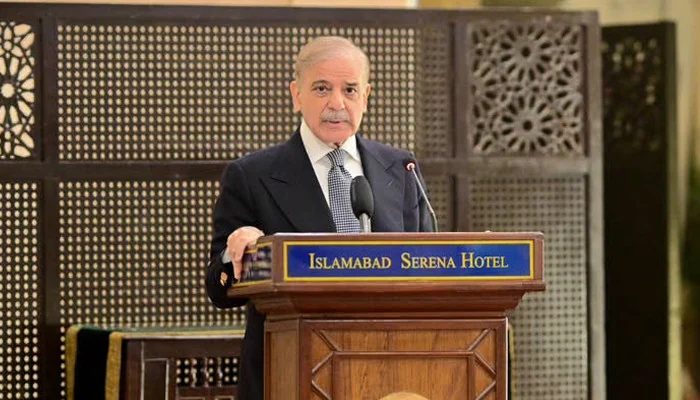
Prime Minister Shehbaz Sharif told the Pakistan-American Business Council on Thursday that civil-military coordination created a vital opportunity to advance national economic interests through collective institutional efforts. Sharif emphasized that export-led growth remains the only sustainable path for Pakistan's economic development.
- Prime Minister Shehbaz Sharif stated that civil-military coordination provides a vital opportunity to advance national economic interests.
- The government has successfully reduced inflation to 11.5 percent and lowered the policy rate to 12 percent.
- Foreign exchange reserves have reached approximately billion, signaling a recovery from 2023 default risks.
Markets and Policy
The government reduced inflation to 11.5 percent and lowered the policy rate to 12 percent. Foreign exchange reserves reached approximately $10 billion, marking a recovery from 2023 default risks.
Addressing the council, the prime minister reaffirmed his government's commitment to structural reforms and investment facilitation. He stated that the country must prioritize exports, specifically targeting increased market access in the United States for surgical instruments and sports goods.
He also expressed interest in importing American agricultural products like soybeans. Sharif promised American investors that his administration would remove bureaucratic hurdles and red tape, pledging to listen to their grievances and implement immediate solutions to ensure transparency and efficiency.
Institutions and Economic Management
The premier praised American companies for their role in generating employment and boosting national revenue. He highlighted significant improvements in economic indicators, noting that inflation dropped from 32 percent to 11.5 percent.
He credited fiscal discipline and hard work for these gains, despite global challenges such as the ongoing Gulf crisis. Sharif noted that the government provided Rs400 billion in tax relief in the current budget to stimulate activity and confirmed that the International Monetary Fund (IMF) expressed confidence in the country's economic management.
Sharif emphasized that the government's role is to facilitate the private sector rather than conduct business. To improve performance, he appointed entrepreneur Omar Saeed to lead the Export Development Fund and provided Rs4 billion to the Export-Import Bank of Pakistan for subsidised export financing.
He also announced a shift toward electric vehicles to reduce fuel imports and improve industrial efficiency, noting that the automobile industry failed to achieve 80 percent localisation despite decades of protection. The government also focused on agriculture and livestock, separating the livestock department into an independent unit and engaging consultants from Turkiye and Brazil.
To combat corruption and inefficiency, the prime minister dissolved the Pakistan Public Works Department. He replaced traditional food distribution systems with direct digital cash transfers, disbursing Rs27 billion this year to assist vulnerable families.
Finally, Sharif identified the country's young population as a major asset, stressing the importance of vocational training and technical education to prepare the youth for the modern workforce.