
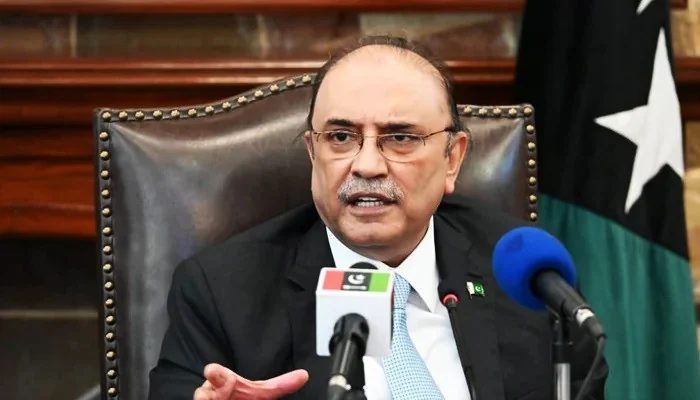
President Asif Ali Zardari approved five Khyber Pakhtunkhwa ordinances and 12 bills in Islamabad on Saturday.
- Special initiatives for selected districts in Khyber Pakhtunkhwa.
- Amendments to provincial assembly powers, immunities and privileges.
- Revisions to higher education and science and technology laws.
Ordinances Approved
President Zardari signed five ordinances that target Khyber Pakhtunkhwa. The Khyber Pakhtunkhwa Special Initiatives Ordinance 2026 (Specific Districts) focuses on development projects in selected districts. The Khyber Pakhtunkhwa Provincial Assembly (Powers, Immunities and Privileges) (Amendment) Ordinance 2026 expands the legal protections and privileges of assembly members. The Khyber Pakhtunkhwa Societies (Registration) (Amendment) Ordinance 2026 streamlines the registration process for societies operating in the province. The Khyber Pakhtunkhwa Speaker and Deputy Speaker (Salaries, Allowances and Privileges) Ordinance 2026 revises the remuneration and benefits for the provincial assembly's leadership. A fifth ordinance, not named in the release, was also approved and is expected to address additional administrative matters in the province.
Bills Signed
In addition to the ordinances, President Zardari gave assent to twelve bills that amend a range of national laws. The Archival Material (Protection and Export Control) (Amendment) Bill, 2026, strengthens safeguards for historical documents. The Pakistan Study Centres (Amendment) Bill, 2026, and the Area Study Centres (Amendment) Bill, 2026, update the framework for research institutions. The Centres of Excellence (Amendment) Bill, 2026, expands the scope of national research hubs. The Federal Board of Intermediate and Secondary Education (Amendment) Bill, 2026, revises curriculum standards for secondary schools. The Higher Education Commission (Amendment) Bill, 2026, modifies oversight mechanisms for universities. The National College of Arts Institute (Amendment) Bill, 2026, and the National Textile University (Amendment) Bill, 2026, adjust governance structures for these institutions. The NFC Institute of Engineering and Technology, Multan (Amendment) Bill, 2026, updates licensing procedures for engineering education. The National Rahmatul-lil-Alameen Wa Khatamun Nabiyyin Authority (Amendment) Bill, 2026, revises the authority's mandate. The Pakistan Council for Science and Technology (Amendment) Bill, 2026, enhances the council's research funding processes. Finally, the Pakistan Tourist Guides (Amendment) Bill, 2026, modernizes licensing for tourism guides across the country.
Higher Education Focus
Several of the approved bills target higher education and scientific research. The amendments to the Higher Education Commission, the National College of Arts Institute, the National Textile University, and the NFC Institute of Engineering and Technology aim to improve institutional governance and funding. The Centre of Excellence amendment expands the national network of research centers, while the Pakistan Study Centres and Area Study Centres amendments streamline research collaboration across provinces. These legislative changes are intended to boost academic standards and research output nationwide.