
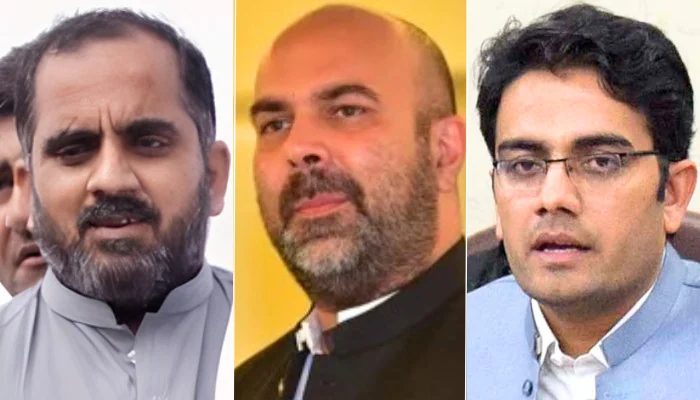
Police arrested three PTI leaders in Peshawar on Tuesday after they arrived at the high court seeking interim bail.
- Taimur Saleem Jhagra, Kamran Bangash and Irfan Saleem were taken into custody outside the Peshawar High Court.
- Forensic analysis linked the leaders' photos to footage used in the Radio Pakistan arson case.
- The arson followed protests triggered by Imran Khan's May 9 arrest.
Arrests at High Court
Superintendent of Police Operations Farhan Khan stood at the main entrance of the Peshawar High Court with a police contingent when officers seized the three men. The police moved the detained leaders from the high court's bar room to a police vehicle outside the building. Taimur Saleem Jhagra, former minister, Kamran Bangash and Irfan Saleem were all identified as PTI officials during the operation. Their arrest occurred shortly after the anti‑terrorism court dismissed their bail applications.
Forensic Findings
The Punjab Forensic Science Laboratory examined sixteen videos supplied on a USB device at the request of Peshawar police. The laboratory's report, prepared between 19 and 23 December 2025, found visual similarities between the profile photographs of the three PTI leaders and individuals appearing in the footage. The analysis also detected evidence of clip splicing in two videos that featured Khyber Pakhtunkhwa Chief Minister Sohail Afridi and Irfan Saleem. The forensic review was limited to visual evidence and did not include audio or metadata.
Protest Background
Violent protesters, many of them PTI workers and supporters, attacked a historic building in Peshawar after party chairman Imran Khan was arrested on 9 May by Punjab Rangers to enforce a National Accountability Bureau warrant in the Al‑Qadir Trust case. The demonstrators stormed the structure, set fire to its interior and looted valuables. The blaze consumed irreplaceable records and caused extensive damage to the historic edifice. Similar unrest spread to several other cities, where activists damaged public and private property, including military installations.