Pakistan has quietly become one of the world's most compelling examples of how ordinary households and businesses can drive an energy transition from the ground up, even when national policy lags behind. This conclusion emerged in a virtual session by 350 Org and Global Energy Monitor, bringing together frontline stories from five regions ahead of the UN General Assembly and the Global Renewables Summit. Pakistan's experience drew attention of participants as a major success story, proving that renewable energy is no longer a distant promise but a reality.The debate over knowledge-sharing is particularly relevant as the federal government remains reluctant to fully support rooftop solar and has argued that nighttime power outages are unavoidable because of what it describes as "lopsided" reliance on solar.
The issue warrants closer scrutiny, as nighttime supply challenges are linked to the need for balancing, storage and effective grid management rather than the use of solar power itself.The experience suggests that Pakistan's challenge is not that consumers adopted solar too quickly, but that the grid and regulatory framework have struggled to keep pace with the transition. The shift towards rooftop solar also highlights the need for energy policies to adapt to changing patterns of electricity generation and consumption.According to Dr Omais Abdur Rehman of Renewables First, Pakistan's energy transition is no longer waiting on the government.
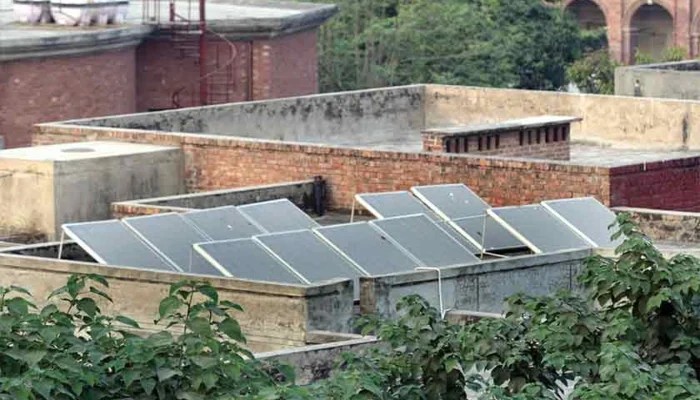
Households and businesses have imported 55 gigawatts of solar capacity and deployed 38 gigawatts since 2018, while battery storage imports surged by 220 per cent in a single year. This bottom-up shift has already cut the country's fossil fuel import bill by 40 per cent and saved over $12 billion. Even as rising electricity prices force families to spend more on power and less on food, health and education, solar has provided a measure of relief that the grid itself has failed to deliver.
What happens next depends on policy catching up with this pace, through flexible grid planning, an end to taxation on solar, wind, battery storage and EVs, and targeted support so that this transition includes rather than abandons those who cannot yet afford to go solar, Dr Omais observes. Pakistan's example matters because it directly challenges the assumption that energy security comes from large, centralised systems or imported fuels.The Hormuz crisis exposed how vulnerable fossil fuel-dependent economies are to external shocks.
According to 350 Org estimates, higher oil and gas prices had already shifted hundreds of billions of dollars from households and businesses to the oil and gas industry, with the total cost projected to reach $670-700 billion by the end of the year. In that environment, Pakistan's solar adoption did not simply reduce emissions; it shielded the nation from severe fuel crisis shocks from the Persian Gulf region this year.
Distributed solar delivered what the grid could not -- genuine energy security.Other regions are moving in similar directions, though their stories serve mainly to underline how universal the opportunity is. Brazil holds nearly 114 gigawatts of planned offshore wind capacity, the largest in the world. The West African Power Pool has nearly 12 gigawatts of utility-scale solar in the pipeline across 14 countries.
East Africa's combined operating and prospective solar capacity stands at over 3 gigawatts. In Albay, Philippines, the provincial governor noted nearly one terawatt of untapped technical renewable potential. What these places share with Pakistan is not simply resource wealth but the growing recognition that finance, grids and regulation, not renewable potential, are the real constraints.Pakistan's own potential remains vast.
Its historically fossil fuel-heavy provinces, such as Sindh, show solar and wind potential estimated between 11 gigawatts and 50 gigawatts, offering a prime opportunity to establish renewable energy as a key economic pillar, according to an assessment by the organisers. Distributed solar now accounts for roughly 42 per cent of all operational and prospective solar capacity worldwide. According to Anne Jellema, executive director at 350 Org, "The fossil-fuel crisis has rewritten the energy-security debate.
Together, these stories show that renewables are not simply an alternative to fossil fuels, they are an opportunity to build a better energy system. One that is cleaner, more affordable and more resilient.".