
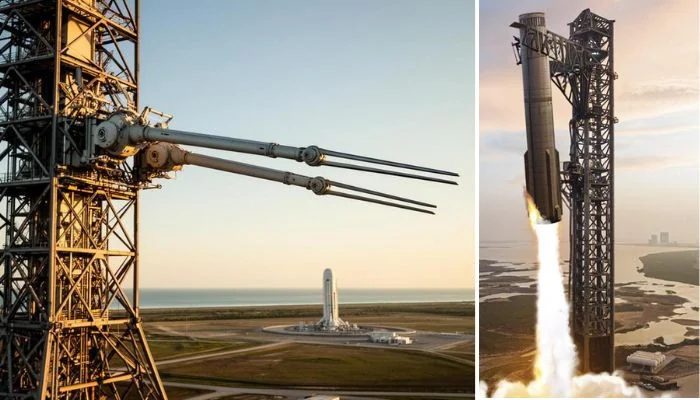
SpaceX scheduled the 15th test flight of its 407-foot-tall Starship rocket from Starbase, Texas, for Friday, November 13, 2026, aiming to recover the spacecraft using mechanical arms.
- SpaceX will attempt to catch the Starship spacecraft using mechanical arms known as chopsticks.
- The mission includes deploying 26 next-generation Starlink satellites during 14 orbits of Earth.
- NASA invested .2 billion in Starship for future lunar landing missions scheduled for 2028.
Starship recovery mission details
The aerospace company plans to use two giant mechanical arms, nicknamed chopsticks, to catch the spacecraft upon its return to the launchpad. While SpaceX previously caught the Super Heavy booster on three occasions, catching the main spacecraft presents a more complex challenge. The vehicle travels at higher speeds and must withstand the intense heat and pressure of atmospheric re-entry.
The mission timeline begins with the Super Heavy booster returning to the launchpad approximately six and a half minutes after liftoff. The Starship spacecraft will then reach an altitude of roughly 275 kilometres. During this phase, the craft will complete 14 orbits around Earth and deploy 26 next-generation Starlink satellites. More than 22 hours after the initial launch, the spacecraft will return to Texas, where the mechanical arms will attempt to catch it.
Future space travel goals
Elon Musk aims to achieve weekly Starship launches by the first half of 2027. A successful recovery of both the booster and the spacecraft would allow for full reusability, which could significantly lower the overall costs of space exploration. This development remains a priority for the company as it scales its operations.
The National Aeronautics and Space Administration continues to support the program through significant financial backing. The agency provided SpaceX with approximately $3.2 billion to develop Starship as a lunar lander. NASA plans to utilize this specific spacecraft to transport astronauts to the Moon in 2028. This test flight serves as a critical step toward validating the technology required for those future lunar missions.