
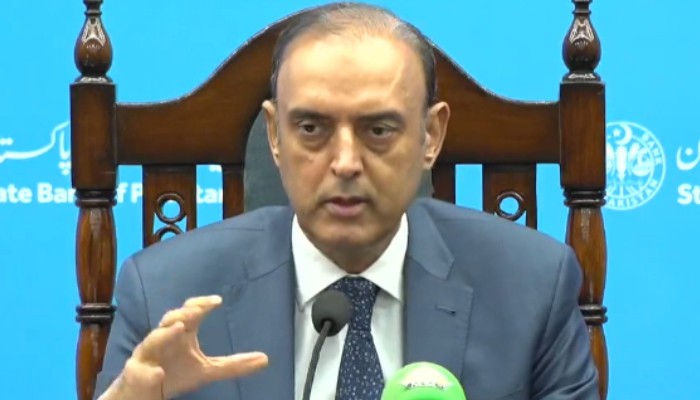
The State Bank of Pakistan (SBP) left the policy rate unchanged at 11.5% on Monday, amid heightened risks to the macroeconomic outlook following renewed hostilities between the US and Iran in the Middle East. According to a statement, the central bank's Monetary Policy Committee (MPC) assessed that the macroeconomic outlook has improved from its previous meeting, though it remains susceptible to heightened risks, particularly following the resurgence of conflict in the Middle East.
"Meanwhile, the Committee observed that the earlier de-escalation had led to a decline in global oil prices and a relative ease in supply chain disruptions, which resulted in some improvement in recent economic indicators," read the communique issued by the SBP. The MPC observed that headline and core inflation moderated in June; however, both remained at elevated levels. At the same time, incoming high-frequency indicators pointed to some pickup in economic activity, whereas external account pressures remained moderate, it noted.
"Taking into account these developments and evolving risks, the MPC assessed that the current monetary policy stance remains appropriate to guide inflation towards the target range of 5-7% over the medium term," according to the SBP. The SBP has raised the policy rate once this year, by 100 basis points to 11.5% in April - its first increase in nearly three years - after holding rates steady since October 2025. That move followed a cumulative 1,150-basis-points reduction from a record high of 22% in June 2024, as the bank eased aggressively once inflation came under control.
Monday's decision to hold rates follows a similar decision to keep it at 11.5% at the June meeting as well. Meanwhile, the MPC noted that proactive macroeconomic management - underpinned by a prudent monetary policy stance and sustained fiscal consolidation - has helped effectively manage the ongoing supply shock and preserve macroeconomic stability, despite a challenging global environment. It reiterated its commitment to achieve the objective of price stability, stating it will continue to closely monitor incoming data and evolving developments, while ensuring robust economic growth moving forward.