
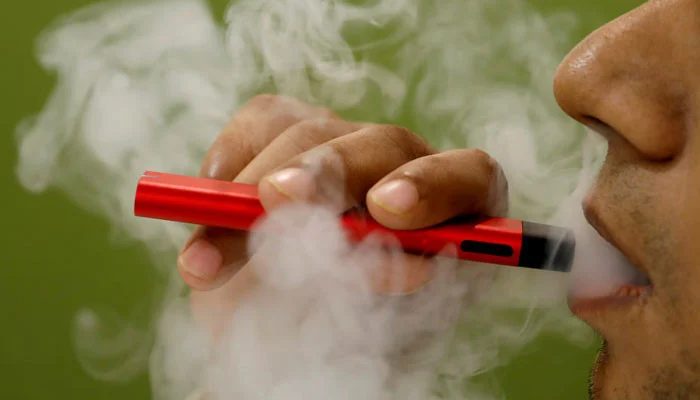
The Pakistan Young Scientists and Innovators Council has urged Prime Minister Shehbaz Sharif to order stronger measures to regulate the import, sale and use of electronic cigarettes and vaping products, citing concerns over their growing popularity among young people and potential exposure to toxic substances. In a letter to the prime minister, Council President Ch. Muhammad Haseeb Usman, General Secretary Annan Usman and Vice President Rania Riffat said vaping products were increasingly available across the country and had become particularly popular among young people, including school- and college-going students.
The council leaders described vaping as a public-health concern and called for greater scrutiny of the composition, marketing and availability of such products. They said e-cigarette liquids and aerosols could contain nicotine, propylene glycol, glycerol, flavouring substances and other chemicals, while metals could also be present in the aerosol. They further said heating e-liquids could generate compounds including formaldehyde, acetaldehyde and acrolein.
Citing research conducted by Johns Hopkins University, the PYSIC leaders said analyses of emissions from popular vaping products had detected nearly 2,000 chemicals, many of which were unidentified. They said the finding underscored the need for further research into the chemical composition of vaping emissions and their potential health implications. The young scientists said e-cigarette aerosols were not simply harmless water vapour, noting that they were produced when e-liquid was heated by a coil.
According to the council, the heating process could trigger chemical reactions and produce substances not originally present in the liquid. They said the quantity and type of chemicals generated could vary depending on factors including the e-liquid's ingredients, device design, battery voltage, heating temperature and users' puffing patterns. The council also raised concerns about metals, saying components in contact with e-liquid could contribute metals and metal particles to the resulting aerosol, potentially increasing users' exposure.
On health effects, the PYSIC leaders said existing research had raised concerns about possible associations between vaping and respiratory and cardiovascular problems, lung injury and other adverse health outcomes. However, they acknowledged that the long-term health effects of many substances encountered through vaping remained incompletely understood. They also cited differing research findings on formaldehyde emissions, saying some studies had reported little or negligible release under certain normal settings, while others had found substantially higher emissions under particular heating conditions.
The council members warned that newer devices capable of operating at higher temperatures could alter the quantity and composition of chemicals generated during vaping and called for their scientific assessment. They urged the government to strengthen oversight of the expanding vape market, particularly its availability and marketing to young people, and take measures to regulate the import, sale and promotion of electronic cigarettes alongside creating greater public awareness of their potential risks.