
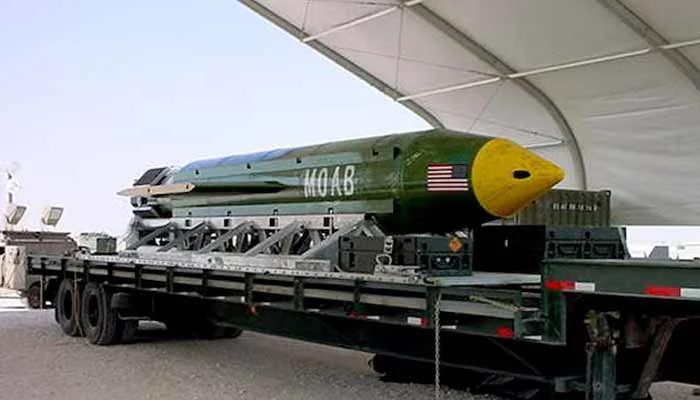
The United States is considering using its biggest non-nuclear bomb against Iran if President Donald Trump decides to renew combat in the war that has hit a deadlock, CNN reported Thursday. The military is planning for the potential use of the GBU-43/B Massive Ordnance Air Blast (MOAB) bomb - better known as the "Mother Of All Bombs" - to target Iranian energy infrastructure and nuclear sites.
According to reports, Trump is trying to boost his low approval ratings ahead of November's midterm elections, as polls show the unpopular war in Iran and the resulting fuel price hikes are hurting his Republican Party. Diplomatic efforts to end the conflict, which erupted with US-Israeli strikes on Iran in February, have been at an impasse since the summer.
However, officials have raised doubts over the efficacy of the bomb if deployed, particularly its ability to destroy suspected underground nuclear sites in the Islamic Republic. "The MOAB is a massive information operation-type weapon that is great for huge area clearance but not much else," a source familiar with the plans told CNN.
"It is definitely not designed as a deep-penetration warhead." The United States and Israel have stated the war was necessary to prevent Iran from acquiring nuclear weapons - a goal Tehran has long denied pursuing. There are also concerns over the possibility of civilian casualties from such a massive weapon.
Washington has in recent weeks dialed back military operations in favor of economic pressure. In 2017, the US military in Afghanistan dropped the MOAB to target Daesh hideouts in a complex of tunnels and bunkers, killing more than 90 militants.
Military analysts suggest that while the psychological impact of such a deployment would be significant, the strategic value remains questionable. The Pentagon has not officially commented on these specific contingency plans, maintaining that all options remain on the table regarding regional security.
The international community has expressed alarm at the prospect of escalating the conflict. European allies have urged the White House to prioritize de-escalation, warning that the use of such a high-yield conventional weapon could trigger a wider regional conflagration.
Energy markets have reacted nervously to the reports, with oil prices fluctuating as traders assess the risk to supply chains in the Persian Gulf. The potential for disruption to global energy infrastructure remains a primary concern for the global economy.
As the midterm elections approach, the political stakes for the administration continue to rise. The debate over whether to pursue a military solution or return to the negotiating table remains a central theme in American domestic discourse.
Ultimately, the decision rests with the President, who faces pressure from both hawks within his administration and those advocating for a diplomatic resolution to the ongoing standoff with Tehran.