
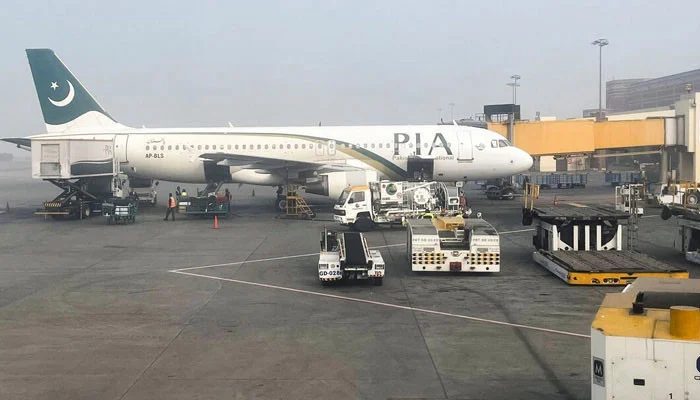
A major financial fraud involving the illegal reallocation of premium and extra-legroom seats has been exposed at the Pakistan International Airlines (PIA) station, Allama Iqbal International Airport, Lahore. Over 20 staff members and officers, including three women, have been implicated in the scam.
According to official audit documents, PIA ground staff at the Lahore airport were collecting additional charges directly from passengers - after boarding or flight departure - for premium, extra-legroom, and bulkhead seats on domestic and international flights. Instead of depositing the fees into airline accounts, the staff manually altered system records to display these as standard seats, pocketing the collected amounts.
This financial irregularity was uncovered by the Lahore Finance and Audit Committee during an audit of records from May 2024 to 2025. Following these findings, Station Manager Ashfaq Hussain Awan was directed to take formal action.
Official documentation confirms that PKR 5,060,269 was recovered through salary deductions from the identified employees and deposited into the PIA account. Despite being caught, all involved staff members reportedly remain on duty.
Although departmental disciplinary proceedings were mandatory under PIA rules, further administrative action was reportedly halted following interventions by senior officials. The lack of strict punitive measures has raised concerns regarding internal accountability within the national carrier.
Separately, the Airports Security Force (ASF) cancelled the entry pass of a PIA staffer on May 9, 2026, for providing unauthorized protocol to a passenger, highlighting ongoing issues with staff conduct at the facility. Officials noted that one individual involved in the fraud has since retired, and no further disciplinary instructions have been received regarding the remaining staff.
The incident remains a point of contention for the airline's management as they struggle to maintain financial transparency. The audit report highlights a systemic failure in the monitoring of seat allocation processes.
By bypassing the automated booking system, the staff managed to evade detection for a significant period before the audit committee flagged the discrepancies. The recovery of the funds was a significant step, yet the decision to retain the employees has drawn criticism from industry observers.
Many argue that such leniency encourages further malpractice within the organization. As the airline undergoes restructuring, incidents like these underscore the urgent need for robust digital oversight and stricter enforcement of disciplinary policies to protect the financial integrity of the institution.