
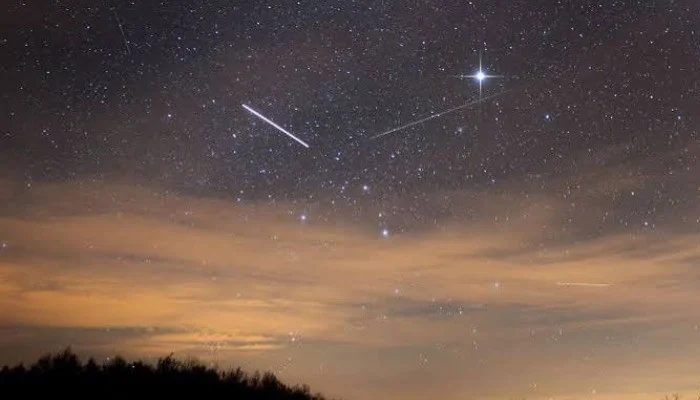
Astronomers predict excellent observing conditions for stargazers hoping to catch sight of some unusual bright meteors when the Southern Taurid meteor shower peaks overnight Tuesday through Wednesday. The Southern Taurids meteor shower has been ongoing since Sept. 20, with the peak occurring at midnight local time on Nov. 5.
Although the Taurids are a fairly unimpressive shower, with only about five meteors per hour, they are known for creating bright fireballs, which can be as bright as Venus. "The Southern Taurids are spectacular because they produce many bright fireballs," said Bill Cooke of NASA's Meteoroid Environment Office.
"There aren't many of them, but once you see one, you won't forget it. It will create a brilliant streak in the sky."
Atmospheric entry velocities of the Taurid meteors are low, at 65,000 miles per hour, making them much slower and easier to observe compared to the Orionid meteors. The meteors appear to originate from the constellation Taurus, which lies near Orion in the southeastern sky on November nights.
The meteor shower happens when Earth moves through debris left by Comet 2P/Encke, which has an orbital period of 3.3 years - the shortest of any comet. Fireballs are made up of debris ranging from marbles to small boulders, some of which leave smoke trails behind lasting for several minutes.
The best way to watch the meteor shower is to get somewhere dark, allowing your eyes to adjust for 20 to 30 minutes without using phones. It will be a good time to view the meteor shower since there will be a crescent moon, making it easier to see the meteors.
"Just look up and enjoy the show," said Cooke. "It's the most basic form of astronomy.
All you have to do is use your eyes." The Northern Taurids peak on the night of November 11-12. Cooke added that the Earth is expected to travel through a denser cloud of Taurid debris in 2032, which would bring "lots of brilliant fireballs." This event serves as a reminder of the dynamic nature of our solar system and the constant interaction between Earth and celestial debris.
For those living in urban areas, experts recommend traveling away from city lights to maximize visibility. Even with the crescent moon, light pollution remains the primary obstacle for amateur astronomers.
As the night progresses, the constellation Taurus will climb higher in the sky, providing a better vantage point for observers across the Northern Hemisphere. Clear skies are the final requirement for a successful viewing experience.
Whether you are a seasoned astronomer or a casual observer, the Southern Taurids offer a rare opportunity to witness the remnants of a comet burning up in our atmosphere, creating a natural light show that has captivated humanity for centuries.