
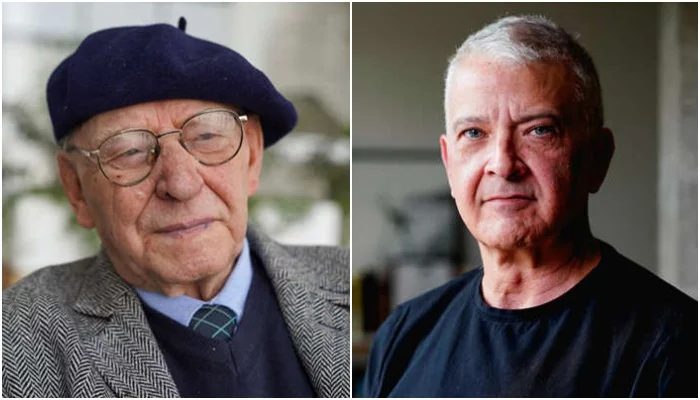
As Pope Leo prepares to return to South America, Peruvian abuse survivor Pedro Salinas sees reason for both hope and unease in the pope's record confronting clerical abuse. For a decade, Salinas watched as the Catholic Church investigated Sodalitium Christianae Vitae, the Peru-founded Catholic community he helped expose.
Then, in the final days of Pope Francis' papacy last year, the Vatican dissolved the group and its branches. "What was achieved, nobody, absolutely nobody, could even have imagined.
It was inconceivable. But it happened," said Salinas, 63, a journalist and former member whose reporting helped expose allegations of sexual, physical and psychological abuse inside the group.
Robert Prevost, as Leo was known when he was a bishop in Peru and later a Vatican cardinal, quietly worked with survivors and advocates, Salinas said, attending meetings, gathering information and communicating by WhatsApp and email. "Without him, the needle didn't move," Salinas said.
The first US-born pope will travel through Uruguay, Argentina and Peru November 6 to 17, ending with six days in Peru, where he arrived as a missionary in the 1980s and later became a citizen and served as bishop of Chiclayo. The Vatican said he will meet clergy abuse survivors there, as he has done on other recent trips.
Survivors say they wonder whether Leo's approach in Peru, which they credit with helping bring about the rare step of dissolving a Catholic community, can translate into broader change across a Church where they say accountability is uneven. "What is lacking are bishops everywhere in the world committed to this issue," Salinas said.
Peru is preparing for a tourism bonanza during Leo's visit. José Enrique Escardó, 56, president of a Peruvian survivors network, views the excitement from a different perspective.
While Escardó acknowledged that some survivors credit Leo with helping dissolve Sodalitium, he said the Church's actions have not delivered sufficient justice, accountability, or reparations. "Survivors have grown tired of being told things, of being promised things, but nothing being done," Escardó said.
"We feel more abandoned. We feel deceived." He wants survivors to become involved in shaping Church policy and wants reparations to include psychological care and education.
The Vatican did not respond to a request for comment for this story. Francis, the first Latin American pope, left a complicated legacy, survivors say.
Juan Carlos Cruz, the survivor whose case became central to Francis' 2018 reckoning with abuse in Chile, credits Francis with changes including revisions to canon law, removal of the pontifical secret - the Church's highest level of confidentiality - surrounding abuse cases and Vos Estis Lux Mundi, a Vatican framework for bishops accused of abuse or cover-up.
"We're still at the tip of the iceberg," said Cruz, whom Francis appointed in 2021 to the Pontifical Commission for the Protection of Minors. "The commission has been working for years on universal safeguarding guidelines and those standards need to be applied around the world." Anne Barrett Doyle, co-director of the watchdog group BishopAccountability.org, which tracks Catholic Church abuse allegations worldwide, called Vos Estis the most significant action Francis took on abuse.
But she said the Vatican rarely makes clear whether an accused bishop's resignation is linked to wrongdoing, leaving questions about transparency and accountability. The upcoming papal trip has reignited intense debate among advocacy groups and survivors regarding systemic reforms within the Catholic Church.
Many observers note that while individual cases receive attention, structural changes remain slow and inconsistent across different dioceses globally. As preparations intensify in Lima and other regional capitals, civil society organizations are planning peaceful demonstrations to draw attention to unresolved cases of abuse.
These groups emphasize that symbolic gestures must be followed by robust, binding policies that protect vulnerable populations and ensure complete transparency from the highest levels of the Vatican down to local parishes. The Vatican's internal judicial processes continue to face scrutiny from international legal experts who argue that canon law often conflicts with civil legal standards in handling abuse allegations.
Reform advocates maintain that until independent oversight mechanisms are established, survivors will continue to view institutional promises with profound skepticism, regardless of which pontiff holds office. Ultimately, the upcoming visit serves as both a diplomatic mission and a crucial test of the Church's evolving stance on accountability.
For survivors like Salinas and Escardó, the true measure of success will not be found in ceremonial addresses, but in concrete, verifiable actions that dismantle cultures of impunity and deliver genuine justice to victims worldwide.