
Two men wearing head torches climbed through a forced-open window at the Fondazione Magnani Rocca museum near Parma on the night of March 22 and calmly lifted artworks by Cézanne, Renoir and Matisse from the walls. Within three minutes, they had passed the works, valued at about €9 million ($10 million), to an accomplice and fled.
At the museum's main gate, a fourth man discharged a fire extinguisher when the alarm sounded, distracting the custodian. "Whatever could go wrong, did," said Stefano Roffi, director of the private foundation that runs the museum.
The raid was one of a string of museum thefts in France, Italy and Spain since last year's heist at the Louvre in Paris, raising concerns that criminals are increasingly targeting smaller institutions with fewer resources to protect valuable collections. "This is where we see the 'Louvre effect'," said Marc Balcells, a Barcelona-based researcher specialising in crimes against cultural heritage.
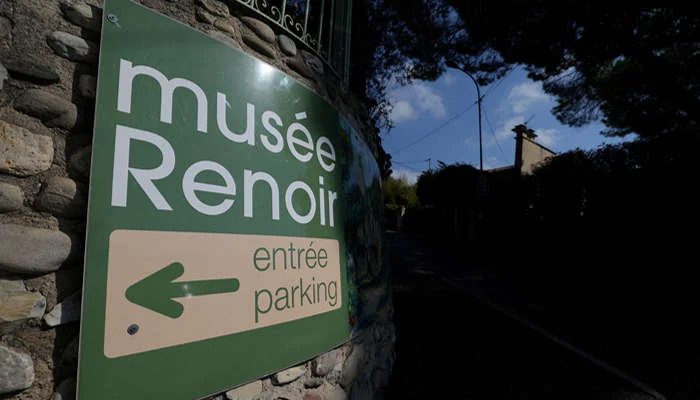
"If the Louvre was so easy to rob, just imagine a tiny museum in a rural area or a smaller town." Works by Antonello da Messina vanished from a museum in his Sicilian hometown in August, while two Renoirs were stolen from Cagnes-sur-Mer on the French Riviera the following month.
In Spain, thieves stole hundreds of historic gold coins from museums in Badajoz and Albacete and made off with a Bronze Age treasure in Villena, near Alicante. A 2024 survey by France's Culture Ministry found only one in four cultural institutions had an emergency and risk-prevention plan, while nearly half lacked video surveillance.
A French parliamentary report in May said museums lacked the resources and preparation to adequately protect artworks and artefacts. In Italy, the challenge is amplified by the way the country's cultural heritage is spread across hundreds of towns and institutions, a legacy of centuries of fragmented rule.
"That is also what makes our system distinctive: works remain in the places where they were created," said Antonella Pinna, president of the Italian committee of the International Council of Museums. "But we need to make life harder for criminals."
The council worked with Italy's Culture Ministry and the Carabinieri on museum security guidelines published in 2015, but Pinna said technology alone was not enough. "If an alarm goes off, someone has to make sure it is checked," she said.
In a narrow street in the Tuscan town of Sansepolcro, the civic museum displays four works by Renaissance master Piero della Francesca, born just steps away in the 15th century. The Louvre theft "affected us deeply because cultural heritage is central to Sansepolcro's identity.
It is our soul," culture councillor Francesca Mercati told us. After the Louvre raid, officers from the Carabinieri's cultural heritage protection unit recommended more cameras, longer retention of CCTV footage and tighter controls on bags and bulky clothing.
"We immediately implemented those recommendations," Mercati said. The scale of the challenge is daunting.
Italy has more than 4,400 museums and similar institutions, according to the national statistics agency ISTAT. Spain has about 1,500 museums, while France has more than 1,200 institutions carrying the official "Musées de France" designation, alongside hundreds of smaller collections.
Protecting such a broad network is particularly difficult for small institutions.