
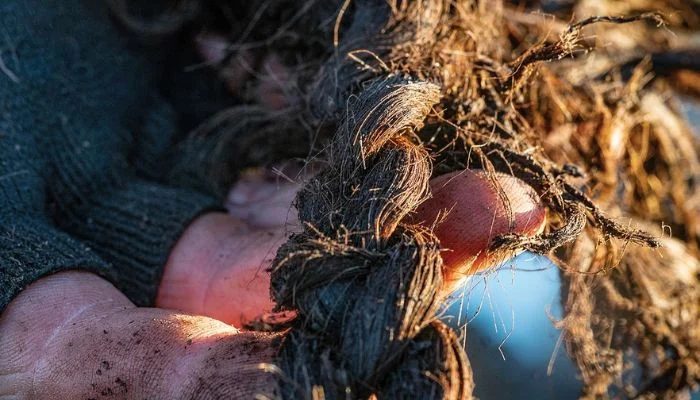
Scientists have recently discovered traces of cannabis on human hair recovered from a tomb in Serbia, and they believe the drug was used to sedate victims before sacrificing them during burial rituals 2,800 years ago. More than 1,000 cannabis seeds, preserved human hair, and the remains of sacrificed horses were discovered at a royal burial mound at the Tunnug archaeological site in southern Serbia's Uyuk Valley.
The seeds were dated to between 800 and 760 BC, while laboratory tests on the hair detected chemical signals consistent with THC, the compound responsible for cannabis's intoxicating effects, and cannabinol, which forms when THC breaks down. However, researchers believe the drug may have served a darker purpose than simply producing intoxication.
Archaeologist Gino Caspari of the University of Bern, who led the study, suggested that cannabis could have been used to calm people selected for human sacrifice during elaborate funeral ceremonies. Excavations have uncovered dozens of sacrificed horses and scattered human bones, raising suspicions that people were also killed as part of the rituals.
The findings, published in the journal Science on Thursday, push back the earliest directly dated evidence of cannabis use for intoxication by roughly 300 years. However, scientists have yet to establish whether the drug was smoked or consumed through other means.
Some independent experts have questioned whether the chemical traces in the hair prove consumption, noting that the remains could have been exposed to cannabis inside the tomb. Researchers acknowledged that the theory involving human sacrifice remains speculative and cannot be confirmed by the available evidence.
The discovery provides a rare glimpse into the complex social and religious structures of ancient societies in the region. By analyzing the chemical composition of the hair, experts hope to gain further insights into the dietary habits and ritualistic practices of these ancient populations.
Further excavations are planned at the Tunnug site to determine if more evidence can be recovered to support the sacrifice hypothesis. The team remains cautious, emphasizing that while the presence of cannabis is scientifically verified, the context of its use remains a subject of ongoing academic debate.
As technology advances, researchers expect that more sophisticated testing methods will allow for a clearer understanding of how these ancient people interacted with psychoactive substances. This study marks a significant milestone in archaeological chemistry and our understanding of prehistoric funerary rites.
The international team of researchers continues to collaborate with local authorities to ensure the preservation of the site. The findings have sparked global interest, highlighting the importance of interdisciplinary approaches in uncovering the mysteries of human history.
Ultimately, this research underscores the enduring human fascination with substances that alter consciousness and the ways in which such substances have been integrated into cultural and religious practices throughout the ages.