
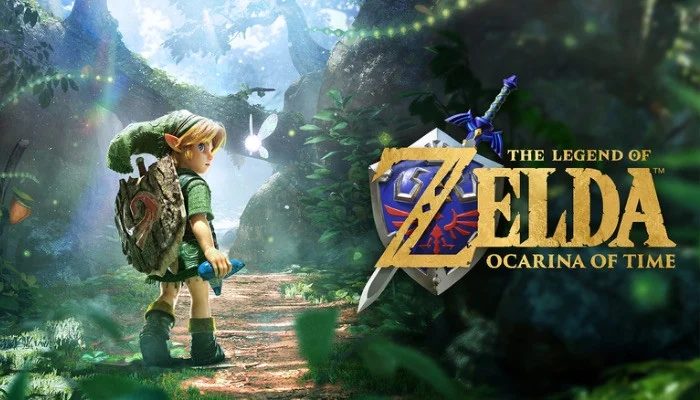
Nintendo's reimagining of The Legend of Zelda: Ocarina of Time debuted Thursday for Switch 2, and soon after, it was being played on PC through emulators. Check out the details regarding this fast-developing emulation situation below.
On the day of release, the game was being played on PC at 15-30 frames per second (FPS) with noticeable visual errors. Within just one day, the Lichii emulator had resolved most issues, and the opening scene and the Great Deku Tree were running at 60 FPS.
In one instance, a fully functional 4K 60 FPS version with clear graphics - free of bloom, artifacts, or slow-motion effects - was observed, with only minor stuttering remaining. In another emulator called Eglantine, a playable version was noted, though it suffered from texture glitches, lighting errors, and audio desync.
Lichii is based on Eglantine, which in turn is built upon Eden, Yuzu, and Sudachi. The Eglantine GitHub repository has shown intense activity, with two branches specifically for Ocarina pushed in a single day.
The first branch, "fix/oot-blackscreen," was intended to fix white flashing caused by the Vulkan scheduler resetting the occlusion counter, alongside shader fixes for AMD hardware and vegetation rendering. The second branch, "oot-optimisation-fixes," introduced pipeline caching and background-thread processing to improve performance.
YouTuber ElAnalistaDeBits showcased the injection of NVIDIA's DLSS via HDMI to remove the shimmering caused by Nintendo's implementation of FSR 1.0 in the original game. The Switch 2 hardware is compatible with DLSS, which is frequently utilized by developers.
Emulation developers continue to push updates rapidly to ensure complete stability across various computer configurations. Fans worldwide are closely following these technical breakthroughs as they bridge console boundaries onto personal computers.
Industry analysts point out that rapid emulation highlights the growing processing power of modern PCs as well as the open architecture similarities found in contemporary gaming devices. Nintendo has not yet issued an official statement regarding these developments.
Further optimizations are expected in upcoming weeks as community contributions expand and refined patches become widely available for download across dedicated repositories.