
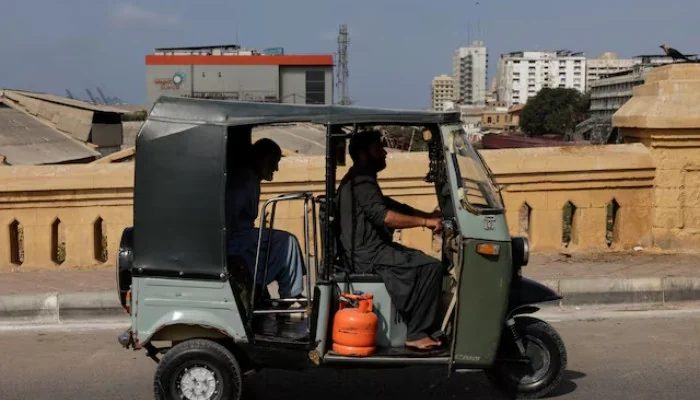
Prices and supplies of Liquefied Petroleum Gas (LPG) are under unprecedented pressure amid high winter demand, leaving hapless consumers to contend with higher costs and limited availability. Households that rely on LPG for cooking are entering winter amid a familiar squeeze: the regulator's announced price and the amount consumers actually pay have diverged sharply, with the gap widening as demand peaks.
For November, the Oil and Gas Regulatory Authority (OGRA) set the official LPG price at Rs294.07 per kg, equivalent to Rs3,470.09 for a standard 11.8-kg domestic cylinder. Retail prices, however, are reported at Rs520 to Rs600 per kg in major cities and as high as Rs630 to Rs700 in some parts of the country.
In the provincial metropolis, LPG prices hover around Rs600 to Rs700 per kg, while residents also report supply shortages. For many households, this has made cooking gas availability and soaring prices a source of anxiety, as retail cylinder prices climb to Rs6,000 to Rs7,200 - roughly twice the notified rate.
The impact is greatest on families without access to piped gas. In these difficult circumstances, LPG - once dubbed the 'poor man's fuel' - is no longer an affordable or accessible option for many.
Hotels, restaurants, and small food businesses also depend on the same cylinder supply, and their higher costs are ultimately passed on to consumers. The pressure is no longer merely seasonal; this year, the usual increase in demand has coincided with supply complications linked to border-trade disruptions and volatility in international markets amid uncertainty around the Strait of Hormuz.
Every delay in import arrivals further tightens retail availability and pushes prices higher. A framework announced after the federal cabinet meeting could affect consumers, though key details remain unclear.
Public-sector entities will play a greater role in LPG imports, but it is uncertain whether state importers can secure enough supply at competitive rates amid peak winter demand. Initial cargoes may be delayed, while marketing companies' inventories are at record lows.
If imports fall short before or during December and January, retail availability could tighten and prices rise sharply. Under the new arrangements, state-owned companies will receive 10 percent of LPG production at a different price from private buyers, creating two cost bases in one market.
A fund for low-income consumers has also been announced, but its disbursement mechanism - and whether it will link to programmes such as the Benazir Income Support Programme (BISP) - remains unclear.