
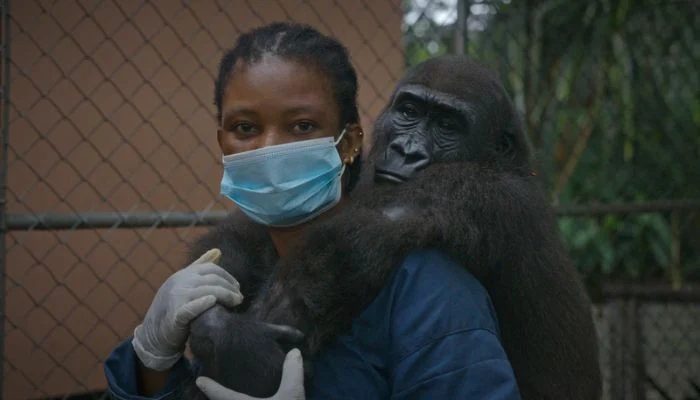
A baby gorilla rescued from wildlife traffickers in Nigeria has finally been moved to a forest sanctuary in the Republic of Congo. This comes three years after she was taken from her natural habitat and put up for sale.
The female western lowland gorilla named Bili was only a few months old when Nigerian customs officials rescued her during an undercover operation in Lagos in August 2023. Investigators posing as buyers took two men into custody, and the men were convicted for their role in the illegal sales.
According to CNN, Bili was suffering from a fungal infection and poor health when she arrived at Drill Ranch, a wildlife rehabilitation centre in southern Nigeria. Primatologist Lindsay Maess, who helped care for her, said Bili was fortunate to survive, as more than 80% of trafficked gorillas reportedly die.
Her rescue also came at a terrible cost. Conservationists believe members of her family were likely killed when traffickers captured her.
After three years of rehabilitation, Bili began her journey to the Republic of Congo on September 21, travelling around 20 hours by road before being flown to her new home. She was transferred to the Jane Goodall Institute's Tchimpounga Nature Reserve, where she was seen climbing trees and exploring the forest.
However, Bili cannot be released into the wild immediately. She must first complete a 40-day quarantine before being introduced to another young female gorilla named Mozambique.
If their rehabilitation progresses well, both could eventually be transferred to the protected Lesio-Louna Reserve. Veterinarian Rebeca Atencia said Bili had adjusted well to her new surroundings.
The rescue offers hope for the young gorilla, whose species remains critically endangered. Conservation efforts continue to focus on protecting these animals from the illegal pet trade, which remains a significant threat to biodiversity in West and Central Africa.
The successful relocation of Bili marks a milestone for the Jane Goodall Institute and the dedicated team at Drill Ranch. The transition from a cramped, illegal environment to a sprawling nature reserve is a testament to the resilience of the species.
Experts emphasize that while Bili's story is a success, the broader fight against wildlife trafficking requires international cooperation and stricter enforcement of existing laws to prevent such tragedies from occurring in the future. As Bili continues to adapt to her new environment, researchers are monitoring her health and social interactions closely.
The introduction to Mozambique is considered a critical step in her socialization, as gorillas are highly social animals that thrive in groups. The hope is that these bonds will prepare them for a life in the wild, away from human interference.
The global community has lauded the efforts of the Nigerian and Congolese authorities in ensuring the safety of this endangered primate. Bili's journey serves as a reminder of the fragility of nature and the importance of protecting wildlife habitats from exploitation.
Her story is not just about survival, but about the collective responsibility to preserve the planet's most vulnerable inhabitants for future generations.