
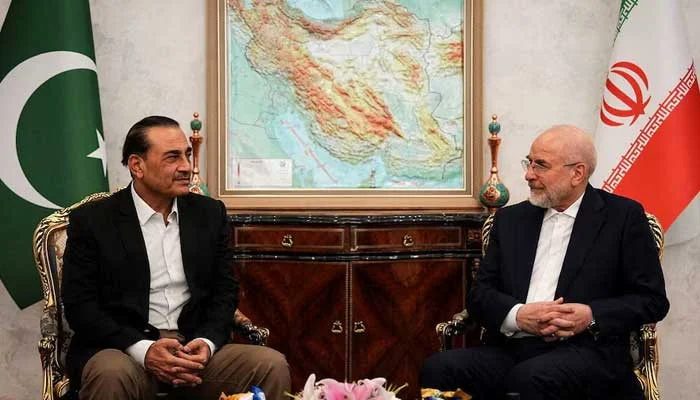
Chief of Army Staff (COAS) General Syed Asim Munir is scheduled to visit Tehran on Tuesday (today). Pakistan has played a key mediating role between the US and Iran this year.
The visit follows earlier talks between General Munir and Iranian leaders in the summer that focused on measures to prevent further escalation, the reopening of the Strait of Hormuz, and an expedited termination of the conflict. Pakistan has taken on a mediator role in negotiations between Iran and the US aimed at ending the war, which began with US and Israeli strikes on Iran in February.
The visit comes amid mounting regional tensions, as Yemen's internationally recognised government forces continue to fight Houthi rebels, who are targeting Saudi Arabia. A day earlier, Interior Minister Mohsin Naqvi said achieving peace between the United States and Iran requires patience, trust, and sustained efforts, stressing that lasting peace cannot be secured in a single meeting.
Addressing the Global Security Forum in Doha on Monday, Naqvi said Pakistan had made every possible effort to bring Washington and Tehran to the negotiating table. He added that there were moments when tensions escalated sharply, but Islamabad did not give up its efforts.
Efforts to revive US-Iran dialogue remain stalled, with both sides at odds over the terms for resuming negotiations. Iranian Foreign Minister Abbas Araghchi said on Sunday that Tehran's proposal to reopen the Strait of Hormuz within 7 days remained on the table, but progress depended on Washington's response to Iran's conditions.
Iran's demands include lifting the US blockade on its ports, easing sanctions on its oil exports, and ending hostilities across regional fronts, while Washington wants Iran's nuclear programme addressed as a priority. Against this backdrop, Naqvi praised Qatar's diplomatic efforts to mediate between the United States and Iran, saying Islamabad and Doha had worked together to prevent further escalation in the region.
The diplomatic community is closely watching this visit, as it represents a critical juncture in regional stability. Analysts suggest that General Munir's direct engagement with Iranian leadership could provide the necessary impetus to break the current diplomatic deadlock.
The focus remains on de-escalation and finding a sustainable framework for long-term regional security. Furthermore, the humanitarian impact of the ongoing conflict has been a point of concern for Pakistan.
During his engagements in Doha, Minister Naqvi emphasized that the economic stability of the region is inextricably linked to the resolution of these geopolitical disputes. He reiterated that Pakistan remains committed to its neutral stance, prioritizing regional peace over partisan interests.
As the situation develops, the international community awaits the outcome of the discussions in Tehran. The success of these talks could potentially pave the way for a broader regional dialogue, involving other stakeholders who have been affected by the recent instability.
For now, the focus remains on the immediate steps to be taken following the COAS's visit. The role of regional powers like Pakistan and Qatar has become increasingly vital as traditional diplomatic channels face challenges.
By maintaining open lines of communication with both Tehran and Washington, Islamabad aims to facilitate a environment where constructive dialogue can eventually replace military posturing. In conclusion, the visit of General Munir is a testament to Pakistan's proactive foreign policy.
While the path to peace is fraught with complexities, the sustained efforts by Islamabad, in coordination with regional partners, reflect a determined approach to mitigating the risks of a wider conflict in the Middle East.