
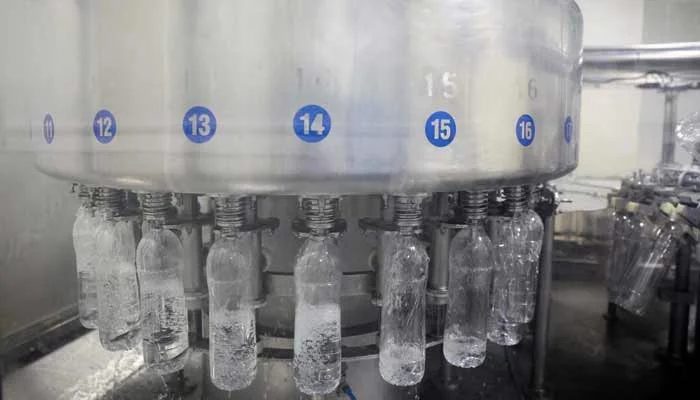
China is emerging as a major supplier of water technology to parched countries across Asia, the Middle East and Africa, as shrinking natural supplies at home push Beijing to invest heavily in manufactured freshwater, industry experts say. Chinese firms are selling desalination membranes, filtration equipment and engineering services to Egypt, Saudi Arabia and the UAE, often through the Belt and Road Initiative (BRI), which connects Chinese capital and infrastructure projects to developing markets.
Even Gulf states, long desalination pioneers, are turning to Chinese manufacturers to produce equipment at scale. China exported more than $2 billion of water filtering and purifying machinery in 2025, up 25% from $1.6 billion in 2020, according to UN Comtrade.
Vontron Technology said it shipped more than 30,000 seawater desalination membranes to BRI countries last year, enough for more than 300,000 tons of daily capacity. In January, PowerChina said it was building a water supply project in Tanzania to serve more than 450,000 people.
At home, Beijing has made water security a strategic priority. Spending on water conservancy has grown faster than military spending since 2015, according to China Water Risk (CWR), a Hong Kong-based think tank.
It now exceeds 1.2 trillion yuan ($170 billion) a year, which CWR says rivals China's central military budget. The push is rooted in domestic risk.
In August, a glacier collapse near the border between Nepal and Tibet showed how volatile natural water sources are becoming. Tibet's "water towers" feed headwaters for nearly two billion people across South, Southeast and East Asia, and climate change is eroding them.
Meanwhile, severe over-extraction in northern China has depleted groundwater and left key farming regions with systemic deficits. "We could see peak water by 2050 across 10 major river systems that provide water to one in two Asians as glacier melt peaks and river flows decline," CWR said.
Peak water is the tipping point where flows from natural water sources reach a maximum and thereafter enter continual decline. "This will put almost half the GDP of 16 countries at risk, including China," CWR said.
Benjamin Horton, dean of the School of Energy and Environment at City University of Hong Kong, said China's ability to develop water technology at scale could cut costs for other water-stressed countries. He said Beijing could become Asia's leading provider of practical water security solutions.
"Through the BRI, there is likely to be continued demand for hydropower, desalination, flood forecasting, irrigation, wastewater treatment, and climate-resilient infrastructure," he said. In July, China rolled out new regulations under its Five-Year Plan that treat water as a pillar of national security and economic self-reliance, not just an environmental issue.
Surface water supplies about 80% of China's freshwater, while recycled water, desalinated seawater and harvested rainwater provide just 3% to 4%. Authorities have pledged to raise that share.
The South-North Water Transfer Project moves billions of cubic meters from the Yangtze to the dry north, but it is constrained by energy costs and shrinking surpluses in the warming Yangtze basin. Saleh Al Khabti, China president of Saudi developer Acwa, said costs are rising and quality is deteriorating in some areas.
China operated 167 seawater desalination projects at the end of 2024.