
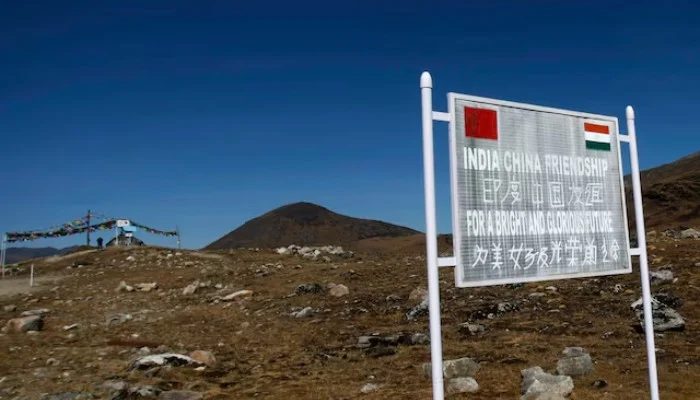
The Indian Ministry of External Affairs has stated that the situation on the Line of Actual Control (LAC) between China and India became tense on Friday when Chinese troops diverged from their established patrolling patterns. Speaking at a regular media briefing in New Delhi, the Indian spokesperson reiterated that peace and tranquility on the border are crucial for the overall development of bilateral ties, Indian media reports.
"In the past few days, a situation arose where face-offs occurred at several locations in Arunachal Pradesh, and this still continues," he said. An Indian commander stated that a new Indo-Tibetan Border Police (ITBP) formation, the Shaurya commandos, had been mobilised during the "ongoing face-offs" with Chinese forces at multiple locations in Arunachal Pradesh.
He also mentioned that the ITBP had raised drone platoons for all border units and prepared a new "strike course" to handle battles like the one with Chinese forces in the Galwan Valley in 2020. The spokesperson did not directly refer to the commander's comments but acknowledged that Chinese forces moving away from patrolling patterns established by the two sides was the main reason for the situation along the LAC being disturbed.
"As we have noted in the past, the situation in the China-India border areas gets disturbed from time to time when Chinese forces diverge from established patrolling patterns," he said. "I would also like to emphasise that the maintenance of peace and tranquility in the border areas is essential for the overall development of bilateral relations."
Military analysts suggest that the deployment of Shaurya commandos indicates a shift in India's defensive posture. By integrating advanced drone technology and specialized strike training, New Delhi aims to deter further incursions.
The region of Arunachal Pradesh remains a sensitive flashpoint, with both nations maintaining significant military infrastructure along the high-altitude terrain. The international community is closely monitoring these developments, as any escalation between the two nuclear-armed neighbors carries significant geopolitical risks.
Diplomatic channels remain open, though progress on disengagement has been slow since the 2020 standoff. Both Beijing and New Delhi have historically accused each other of encroaching on disputed territories.
While the current situation remains localized, the frequency of such incidents has raised concerns about the stability of the border region in the long term. The Indian government continues to emphasize that it seeks a peaceful resolution through dialogue.
However, the mobilization of specialized units suggests that the military is prepared for a prolonged period of vigilance along the frontier. As the situation evolves, the focus remains on whether the two sides can return to the status quo through high-level military and diplomatic talks.
For now, the border remains a volatile zone where minor deviations in patrolling can lead to significant diplomatic friction. The global community awaits further updates as both nations assess the implications of these latest face-offs on their broader strategic partnership and regional security architecture.