
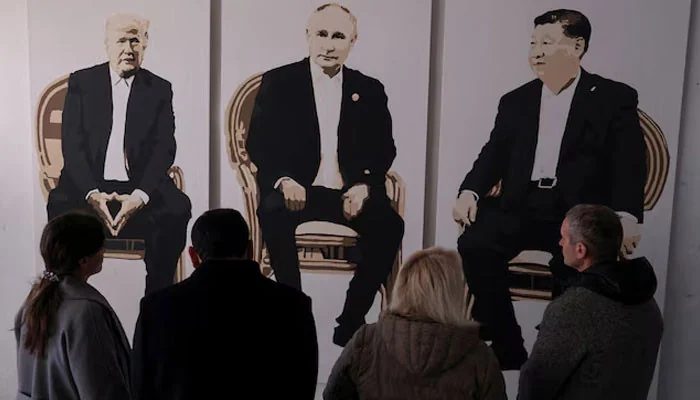
China's Foreign Ministry announced on Monday that the upcoming trilateral meeting between the leaders of China, the United States, and Russia carries groundbreaking significance for global stability. Xi Jinping, Donald Trump, and Vladimir Putin will meet Thursday in Shenzhen.
- The summit marks the first face-to-face meeting between the three heads of state.
- The meeting will take place this Thursday in the southern Chinese city of Shenzhen, which currently hosts the APEC summit.
- She stated that the three leaders will exchange views on safeguarding world peace and promoting strategic stability in major-power relations.
The summit marks the first face-to-face meeting between the three heads of state. The White House confirmed President Trump intends to discuss nuclear arms reduction.
The meeting will take place this Thursday in the southern Chinese city of Shenzhen, which currently hosts the APEC summit. Chinese Foreign Ministry spokesperson Mao Ning confirmed the event during a press briefing in Beijing.
She stated that the three leaders will exchange views on safeguarding world peace and promoting strategic stability in major-power relations. Mao noted that stronger communication and the management of differences serve the interests of all three nations and meet the expectations of the international community.
While the Foreign Ministry did not provide a detailed agenda, the White House previously indicated that President Trump plans to raise the issue of nuclear arms reduction. China has historically rebuffed attempts to include its own arsenal in such discussions, arguing that it is more appropriate for Russia and the United States to negotiate directly because they possess the world's largest nuclear stockpiles.
United Nations Secretary-General Antonio Guterres addressed the summit while speaking in Manila on Monday. He stated that the United Nations stands prepared to support any denuclearization efforts that emerge from the trilateral talks.
The UN has long advocated for nuclear disarmament, frequently warning that rising geopolitical tensions and increased rivalry among major powers have fueled global nuclear risks. Mao emphasized that under current circumstances, China, Russia, and the United States bear a significant responsibility to cooperate on global challenges.
She maintained that the summit will help stabilize the global situation and advance dialogue. Despite the high-level nature of the meeting, the Chinese government stopped short of outlining specific policy outcomes, focusing instead on the importance of the leaders' direct engagement in promoting long-term stability.
International observers suggest that this meeting could signal a shift in the current geopolitical landscape. By bringing together the leaders of the three most influential nations, the summit aims to address the growing friction that has characterized international relations over the past decade.
Analysts believe that even a symbolic commitment to dialogue could reduce the risk of miscalculation between these nuclear-armed powers. The choice of Shenzhen as the venue is also seen as a strategic move.
As a hub of technological innovation and economic growth, the city represents China's vision for a modern, interconnected world. The APEC summit, which is running concurrently, provides a broader platform for these discussions, allowing the leaders to engage with other regional stakeholders while focusing on their trilateral agenda.
As the world watches, the success of this meeting will likely be measured by the ability of the three leaders to find common ground on issues that have long divided them. Whether the talks lead to concrete agreements or simply serve as a platform for de-escalation, the event remains a pivotal moment in 21st-century diplomacy.