
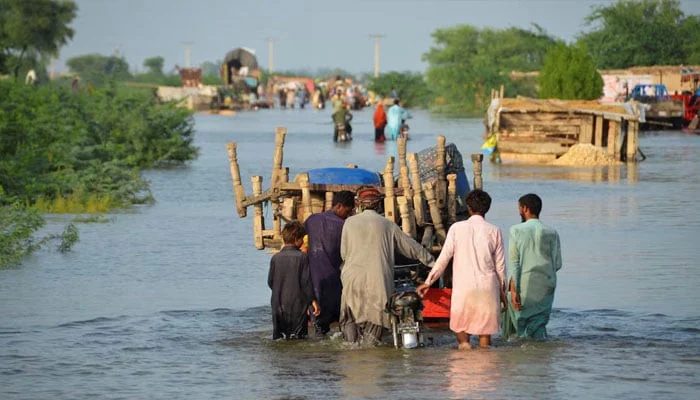
In 2022, devastating floods swept Pakistan, killing over 1,700 people and impacting at least 33 million. Later that year, the country successfully lobbied for the creation of a Loss and Damage Fund at the 27th Conference of the Parties (COP27) in Sharm El-Sheikh.
This year's COP31 has been described by its presidency as the "Implementation COP", referring to how it is expected to help translate promises made at previous COPs into measurable results. Shezra Mansab Kharal, Pakistan's Minister of State for Climate Change and Environmental Coordination, is keen to emphasise this aspect of the conference.
Her country, one of the world's most climate-vulnerable nations, is yet to receive any money from the Loss and Damage Fund. Ahead of the November conference, Kharal met with Dialogue Earth for an exclusive interview at her ministry office in Islamabad.
Here, behind her sprawling mahogany table, the wall bears a portrait of Pakistan's first governor-general, the barrister Muhammad Ali Jinnah, as well as the country's flag. Over a cup of tea, she spoke about the difficulties Pakistan has faced in accessing such finance, how the country will approach obtaining funding at COP31, and the most pressing climate issues facing Pakistan today.
Dialogue Earth: Pakistan was instrumental in the creation of the Loss and Damage Fund at COP27 in 2022. Four years later, will Pakistan expect to receive some of the funds after COP31?
Shezra Mansab Kharal: Today it is 2026, and the people who were supposed to benefit from the funds are still waiting. The reason Pakistan was championing the creation of that fund was because we needed much, much more than what we could cover ourselves.
Pakistan has a diverse terrain, from the cryosphere to the coasts. We've had floods, glacier lake outburst floods, cloudbursts and urban extreme climate events.
Whatever Pakistan could do domestically to fight our climate-induced challenges, we did. Climate change has placed an enormous economic burden on the country, and resources that could have been used for health, education or other development projects have had to be diverted for countering climate-induced disasters.
This year's COP has been called the "Implementation COP", meaning that whatever pledges and promises have been made in the previous COPs now need to be implemented. Developing countries want to see tangible results of all those pledges and promises.
They have set up their office now, in Manila. They have asked countries to give their asks and project proposals, and Pakistan has given two, totalling USD $39.9 million.
Their cap for each project is $20 million. Let us see what we eventually do or don't get.
There is a huge difference between what we asked for and what has been pledged. The pledged sums are paltry and insignificant.
We also want to distinguish between international pledges, actual contributions to the fund, approved project financing and disbursement to individual countries. These are four different things.
The actual disbursement still hasn't happened, but we're hoping that at least one of our projects will be approved by December. Other agencies have helped.
We've had money given to us by the Green Climate Fund, the Global Environment Facility and the Adaptation Fund.