
And real projects need investors who will finance them. Matching viable projects with finance is exactly what the Climate Implementation Bridge (BRIDGE), launched by the COP31 Presidency and the United Nations Development Programme (UNDP), aims to achieve.
- The BRIDGE initiative was launched at COP31 with UNDP Administrator Achim Steiner and Federal Minister for Climate Change and Environmental Coordination Musadik Masood Malik, among others.
- More frequent, intense, and destructive, they are now systemic shocks that turn predictable hazards into multi-dimensional development crises.
- To help Pakistan raise part of the capital it so earnestly needs, BRIDGE does not propose a new agency or a new fund.
Named by the COP31 Presidency as one of the first five pilot countries for this initiative, Pakistan now has a narrow window to demonstrate that a climate-vulnerable nation can move beyond well-written and well-intentioned plans to a focused and credible pipeline of investment-ready opportunities.
The BRIDGE initiative was launched at COP31 with UNDP Administrator Achim Steiner and Federal Minister for Climate Change and Environmental Coordination Musadik Masood Malik, among others. The numbers lay bare the paradox facing Pakistan - a country that contributes less than 1pc of global emissions, yet faces the brunt of a crisis it did not create.
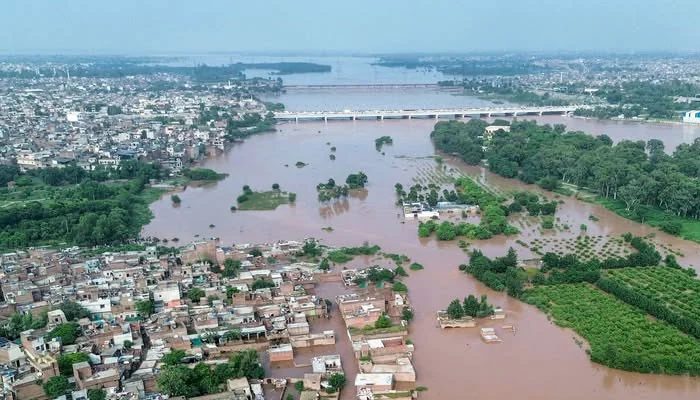
The 2022 floods caused more than $30 billion in losses and damages; the 2025 floods again exposed how climate hazards interact with poverty, fragile livelihoods, infrastructure, and limited pre-arranged finance. These are not isolated disasters.
More frequent, intense, and destructive, they are now systemic shocks that turn predictable hazards into multi-dimensional development crises. Pakistan's Nationally Determined Contributions (NDC) 3.0, which outline the country's own climate action plan for the next decade, call for a 50pc reduction in emissions by 2035 and estimate investment needs of roughly $566 billion.
To help Pakistan raise part of the capital it so earnestly needs, BRIDGE does not propose a new agency or a new fund. It works through existing institutions by linking climate policy, economic planning, public finance, and potential financiers around three practical pillars: stronger national architecture and capacity, better aggregation of project pipelines, and consciously designed financing.
The government owns the process, validating what moves forward, while the UNDP provides technical A useful starting point is already on the table.
The National Sustainable Development Goals (SDGs) Investment Fair that took place in October of this year has already identified projects in clean energy, waste and methane, food security, and nature-based solutions. Large hydropower, landfill-gas recovery, precision agriculture, area-yield insurance, mangrove restoration, and circular-economy initiatives are some of the projects that form part of this plan.
Similarly, the Pakistan Climate Prosperity Plan has a compendium of projects aimed at raising finance in some of these priority sectors. Parallel work on glacial-lake risk, loss and damage, and watershed management addresses the adaptation side.
Some of these projects still need clearer emissions methodologies, stronger safeguards, firmer sponsors, or better-defined revenue models. That is precisely the work BRIDGE is meant to support.
Three financing windows emerge clearly, requiring sovereign or concessional capital from the Green Climate Fund.