
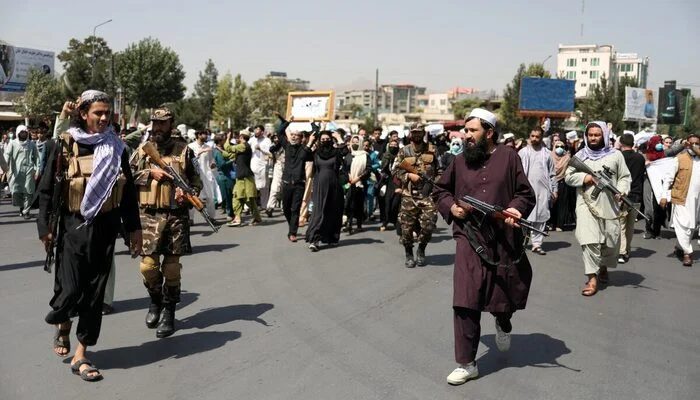
The Taliban captured Kabul in August 2021, but Afghanistan's political conflict did not end with their victory. Five years later, armed opposition is becoming more geographically dispersed and organisationally diverse.
Former soldiers, established resistance fronts and newer local formations are challenging a regime that has secured control without resolving the question of national inclusion. The Kandahari Pashtun Taliban have continued with a policy of excluding other ethnic groups from power, as they had done during their earlier rule in the 1990s.
Their rule, based on coercion and loyalty to Shaikh Haibatullah and the Taliban, is increasingly seen as an occupation rather than representing the majority of Afghans. The resistance initially associated with Panjshir and northern Afghanistan now has a broader footprint.
Ahmad Massoud's National Resistance Front has expanded beyond its original stronghold, including into Baghlan, Kapisa, Kabul and Badakhshan. The Afghanistan Freedom Front, led by former Afghan army chief Yasin Zia, draws on former security personnel and has reported activity across northern and eastern provinces.
The Afghanistan United Front, led by Lieutenant General Sami Sadat, former commander of the Afghan army's 215th Corps, announced its armed campaign in August 2026. Its claimed operations in Kandahar and Helmand extend the challenge into the Taliban's southern heartlands.
This development complicates any explanation of resistance as exclusively a northern or ethnic minority phenomenon. Compiled resistance accounts for August and September claim 119 attacks across 26 provinces, with 256 Taliban personnel killed and another 256 injured.
The United Front accounts for 59 claimed attacks, the Freedom Front 29 and the National Resistance Front for 11. These figures remain claims rather than independently verified battlefield totals.
Different monitoring exercises produce different counts. The geographical pattern nevertheless warrants attention.
Resistance operations extend across northern, northeastern, central, eastern, southern and western Afghanistan. Badakhshan has emerged as a particularly active theatre, while attacks in Kabul and southern provinces suggest that opposition is no longer confined to isolated mountain strongholds.
Smaller formations add another dimension. Qayyum Malang, a former army commando, leads the Homeland Soldiers Front in Badakhshan.
His group reportedly briefly seized the Yaftal district centre on July 17, disarmed Taliban personnel and raised its flag. A temporary seizure does not establish durable territorial control, but it challenges the impression of unbroken local authority.
Amrallah Saleh's Afghan Green Trend has also claimed armed activity. The Afghanistan Republican Front, led by former Bamyan governor Tahir Zamir, reported attacks in Kabul and Ghor.
In Baghlan, the Andarab Resistance Front and the newer New Horizon organisation claimed a joint operation on September 5. Local networks appear to be developing alongside established leadership structures.
There are vulnerabilities within this opposition. Taliban forces killed senior National Resistance Front commander Hasib Panjshiri in August.
The front subsequently announced leadership replacements, including Saleh Mohammad Registani as its general operational commander in September. Its comparatively limited September activity illustrates how dependent resistance organisations can remain on individual commanders.