
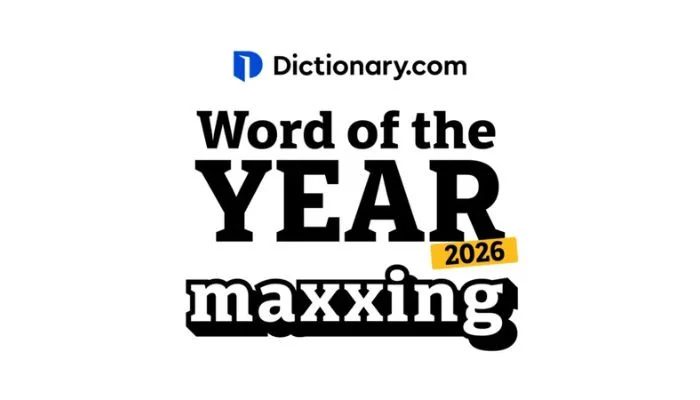
From improving physical appearance to getting better sleep and making the most of artificial intelligence (AI), the internet's growing obsession with maximising everything has given rise to a new word, "maxxing", which has been named the Word of the Year 2026 by Dictionary.com.
The online dictionary announced its selection on Monday, saying the term reflects a culture increasingly focused on improving almost every aspect of life. According to Dictionary.com, the word is derived from "maximising" and refers to pursuing an activity to its fullest potential or optimising something as much as possible.
For instance, "looksmaxxing" refers to improving one's physical appearance, while "sleepmaxxing" involves adopting practices aimed at getting better sleep. Similarly, "gymmaxxing" describes efforts to maximise workout results, whereas "tokenmaxxing" refers to making extensive use of AI tools in daily life and professional environments.
Interestingly, the term has also found its way into politics, with the US government using "homelandmaxxing" in some of its official messaging. Speaking to CBS News, Steve Johnson, director of lexicography at Dictionary Media Group, said the word stood out because of its widespread use across different fields.
The term initially gained popularity on online forums before spreading across social media platforms, particularly among Gen Z and Gen Alpha users. According to Johnson, the use of "looksmaxxing", one of its most popular variations, increased by more than 1,000% this year in the media analysed by the dictionary.
Dictionary.com selected the word after examining search trends, social media conversations and global news coverage. Other shortlisted words included "affordability", "data center", "unc" and "odyssey", which also saw notable traction throughout the year.
Experts note that the trend highlights a broader societal shift towards self-optimization and maximum efficiency. People are increasingly looking for ways to enhance their productivity, health, and lifestyle choices through structured and often digital means.
While some critics view the trend as a superficial aspect of modern internet culture, proponents argue it represents a proactive approach to personal development. The widespread adoption of these terms demonstrates how quickly digital slang can transition into mainstream lexicon.
Last year, the dictionary selected "67", pronounced "six-seven", as its Word of the Year, reflecting the popularity of internet slang whose meaning was often unclear to older generations. As language continues to evolve in the digital age, lexicographers expect more hybrid terms and suffix-based trends to emerge.
Dictionary.com plans to continue monitoring these linguistic developments as internet culture shapes global communication.