
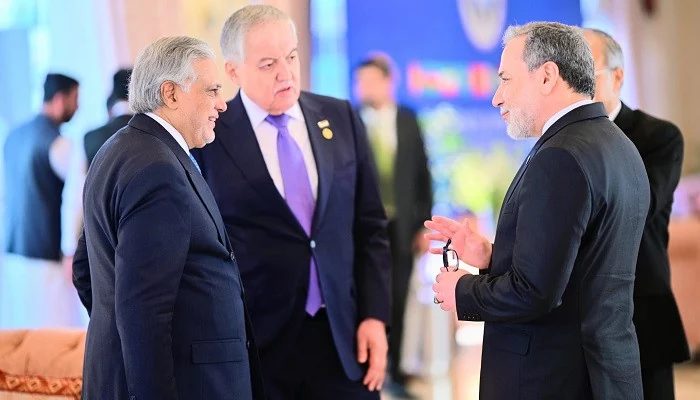
The Economic Cooperation Organisation (ECO) endorsed Pakistan and Qatar's mediation efforts and Iran's initiative for a permanent end to the US-Iran war on Monday in Islamabad. The ECO Council of Ministers adopted the Islamabad Communiqué following their 30th meeting.
- Member states of the Economic Cooperation Organisation endorsed diplomatic initiatives by Pakistan, Qatar, and Iran aimed at securing a lasting end to the US-Iran war.
- The Islamabad Communiqué outlined an extensive agenda for economic integration, trade liberalisation, infrastructure development, and institutional reforms among member states.
- The council addressed the humanitarian situation in Gaza following flooding in the Deir al-Balah area, calling for the urgent delivery of essential supplies and full implementation of the ceasefire.
Iran and Regional Mediation
Member states rejected unilateral sanctions and coercive economic measures against regional nations. Pakistan assumed the ECO chairmanship for 2026-27 with a focus on regional resilience.
The Islamabad Communiqué expressed support for the mediation efforts undertaken by Pakistan and Qatar to resolve the US-Iran conflict. Ministers specifically backed an Iranian initiative aimed at achieving a dignified resolution and the permanent termination of the war.
The document commended Pakistan's consistent diplomatic support and its role in de-escalation, citing the Islamabad Peace Talks, the resulting Islamabad MoU, and Pakistan's participation in negotiations in Burgenstock, Switzerland. The council also recognized Qatar's role as a facilitator during the 81st United Nations General Assembly.
The ministers voiced concern regarding the challenging regional geopolitical environment. They urged restraint and dialogue while rejecting unilateral coercive measures and sanctions, which they described as contrary to the United Nations Charter and international law.
The council reaffirmed the necessity of mutual trust and respect for international law to ensure regional stability. Beyond political developments, the meeting established a broad agenda for economic integration and institutional reform.
Economic Integration and Tehran Summit
Ministers adopted the Strategic Goals of Economic Cooperation 2035 to advance regional connectivity and sustainable prosperity. The council looked toward the 18th ECO Summit in Tehran for further guidance on these goals.
Member states called for the accelerated implementation of the ECO Trade Agreement (ECOTA) and supported the creation of joint trade zones, regional manufacturing enterprises, and value chains. The communiqué emphasized the importance of the ECO Transit Transport Framework Agreement to improve connectivity.
It called for the development of transport corridors and better access to seaports for landlocked members. Additionally, the ministers welcomed the operationalization of the ECO Clean Energy Centre in Baku and encouraged collaboration in artificial intelligence and emerging technologies.
Gaza Humanitarian Situation
The council addressed the humanitarian situation in Gaza following the November 6 flooding in Deir al-Balah. They called for the urgent delivery of food, medicine, fuel, and winter supplies, while demanding an end to forced displacement and the full implementation of the October 2025 Gaza ceasefire agreement.
Pakistan assumed the ECO chairmanship for 2026-27 under the theme "Reviving Regionalism for a Resilient ECO." Member states expressed appreciation for the arrangements made by Pakistan and the leadership of Deputy Prime Minister and Foreign Minister Ishaq Dar during the meeting.