
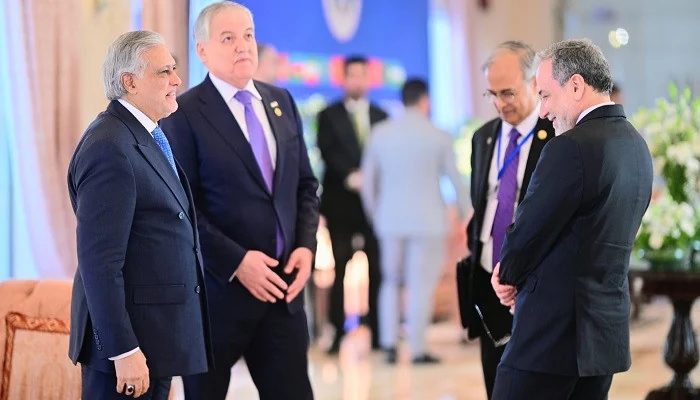
The Economic Cooperation Organisation backed Pakistan and Qatar on Monday in their mediation efforts to end the US-Iran war during a meeting in Islamabad.
- The ECO adopted the Islamabad Communiqué at its 30th Council of Ministers meeting.
- Member states supported Pakistan and Qatar alongside an Iranian peace initiative.
- Pakistan assumed the ECO chairmanship for the 2026-27 term under a new theme.
ECO backs Islamabad Communiqué
The Economic Cooperation Organisation adopted the Islamabad Communiqué at the conclusion of the 30th meeting of the ECO Council of Ministers on Monday. Member states expressed support for the mediation efforts undertaken by Pakistan and Qatar. They also supported an Iranian initiative aimed at achieving a dignified resolution of the conflict and ensuring the complete and permanent termination of the current war. The ministers voiced concern over the challenging geopolitical environment in the region and stressed the importance of restraint, dialogue, and diplomatic engagement. They recognised Iran as a founding member of the organisation and commended its contributions.
The communiqué commended Pakistan for its consistent and constructive diplomatic support for ECO member states and its mediation efforts towards de-escalation during the recent Iran-United States crisis. It specifically referred to the Islamabad Peace Talks, the resulting Islamabad MoU, and Pakistan's participation in post-agreement negotiations in Burgenstock, Switzerland. The member states highly appreciated Qatar as a trusted facilitator of international diplomacy, particularly noting its mediation efforts at the 81st United Nations General Assembly. The ministers called for continued cooperation within the ECO framework to promote lasting peace and stability while reaffirming respect for international law and mutual trust. They also rejected unilateral coercive measures, sanctions, and economic pressures, stating that their extraterritorial impacts violated the United Nations Charter and international law.
Strategic Goals of Economic Cooperation
Beyond regional political developments, the communiqué outlined an extensive agenda for economic integration, trade liberalisation, infrastructure development, and institutional reforms. The ministers welcomed the adoption of the Strategic Goals of Economic Cooperation 2035 as a comprehensive framework to advance regional integration, connectivity, resilience, and sustainable prosperity. They looked toward the 18th ECO Summit in Tehran for strategic guidance on implementing these goals. On trade, member states called for the accelerated amendment and implementation of the ECO Trade Agreement. They urged countries to participate in the process to promote trade liberalisation and regional market integration. They also backed the establishment of joint trade zones, cross-border business cooperation, regional manufacturing enterprises, and value chains alongside simplified customs procedures and e-commerce.
The communiqué stressed the importance of fully implementing the ECO Transit Transport Framework Agreement to improve regional connectivity and trade. It called for the development of transport corridors, better access to international seaports for landlocked member states, reduced transportation costs, and the removal of barriers to the movement of goods. The ministers highlighted cooperation in energy security, clean energy, agriculture, and industrial development while welcoming the operationalisation of the ECO Clean Energy Centre in Baku. They called for greater collaboration in artificial intelligence and other emerging technologies through joint research, training, and capacity-building programmes. On climate change, member states stressed regional cooperation on water conservation, glacier preservation, desertification, and climate-resilient agriculture.
Gaza humanitarian crisis appeal
The communiqué expressed deep concern over the humanitarian situation in Gaza following flooding in the Deir al-Balah area and surrounding neighbourhoods on November 6. It called for the urgent delivery of essential humanitarian supplies, including food, medicines, fuel, heating equipment, tents, and winter clothing. The ministers demanded an immediate end to forced displacement and the deliberate deprivation of food alongside the full implementation of the Gaza ceasefire agreement of October 2025. Concluding the meeting, Pakistan assumed the ECO chairmanship for 2026-27 under the theme Reviving Regionalism for a Resilient ECO. The member states appreciated Pakistan's arrangements and Deputy Prime Minister and Foreign Minister Ishaq Dar for his chairmanship of the meeting.