
An election is not a favour bestowed by politicians; it is a mandate entrusted to them - one that must be continually earned and sustained. The US midterms offered a timely reminder: political divisions may run deep, but voters must retain the power to change the balance of power and hold those who govern to account.
The US midterms demonstrated this in practice. Democrats flipped seven Senate seats and 44 congressional districts.
They also captured 29 of the nation's 50 governorships, claiming the nationwide majority of state executives for the first time in 16 years. The scale of these gains mattered, but their deeper significance lay in the electorate's ability to translate discontent into political consequence.
The results proved a fundamental truth: in a true democracy, no constituency is permanently owned and political allegiance is never irrevocable. Yesterday's support guarantees neither tomorrow's consent nor a ruling party's right to govern.
Loyalty is not a lifetime contract, and a vote is never an entitlement. The ballot allows citizens to register dissatisfaction, change their representatives, and alter the balance of power.
Politicians who mistake electoral support for an entitlement lose sight of the very source of their authority. For Pakistan, the comparison raises a fundamental question: not simply whether elections are held, but whether they command public confidence.
Are voters' choices credibly translated into representation? Do institutions safeguard electoral integrity?
An election must do more than count votes; it must make them count. Historically, Pakistan's elections have been shadowed by allegations of systemic manipulation.
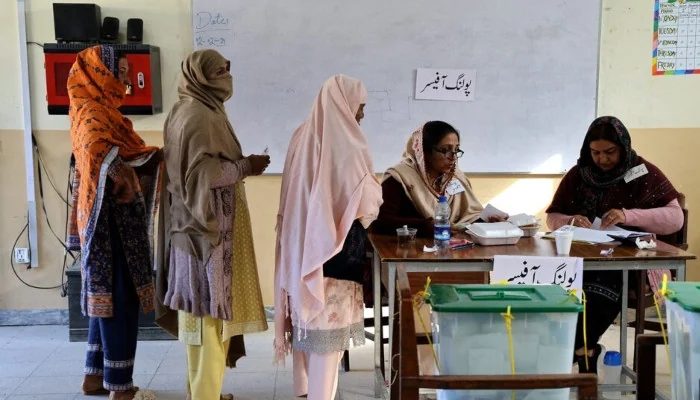
The 2024 election intensified these concerns, with widespread complaints undermining public confidence. Observers highlighted restrictions on political rights, including a polling-day mobile shutdown and the removal of the main opposition's electoral symbol, forcing candidates to contest under random identifiers.
While authorities defended these measures as legal and necessary, intense disputes over the final count persisted. Sharp discrepancies emerged between raw polling-station counts (Form 45) and final constituency tallies (Form 47), leading oversight bodies to note that the resulting outcomes struggled to command broad democratic legitimacy.
This legitimacy crisis is not merely institutional; it is deeply political. Our politics remains centred on pursuing and retaining power rather than the responsibilities it entails.
Allegiance is demanded, and dissent is too often treated as defiance. The electorate risks being reduced to an instrument of political power rather than remaining the ultimate arbiter of who wields it.
The definitive takeaway from the midterms is how electoral integrity underpins meaningful political representation and gives voters a constitutional means to hold those in power accountable. Without these safeguards, voting risks becoming little more than a hollow ritual.