
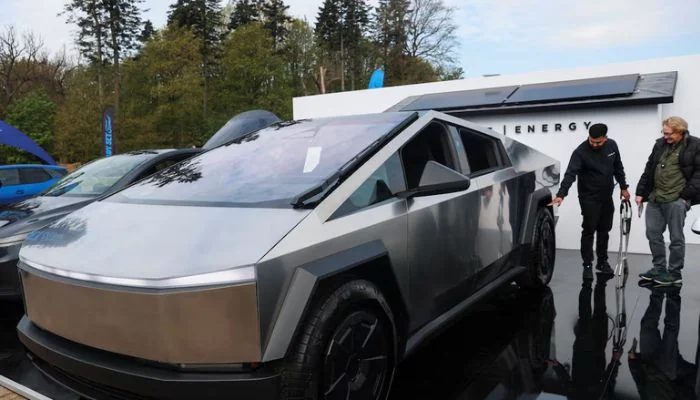
Tesla will wrap up Cybertruck production in its Texas gigafactory by mid-2027, Elon Musk, the company's CEO, stated, marking the end of the controversial journey of a futuristic truck meant to compete with established models. Speaking in a post on X, Elon Musk noted that the decision will allow increasing the number of vehicles of the recently unveiled two-seater robotaxi Cybercab.
"Cybertruck is our best vehicle ever built, and we are now winding down production... this is the end of an era. The current vehicles will be around for a long time."
"This vehicle was an incredible technology development platform and lives on through Cybercab," lead Cybertruck engineer Wes Morrill commented. It was not clear whether the manufacturing process would continue in other plants, or cease completely, since the Austin facility was the only one with the equipment capable of assembling the unique parts of the stainless steel vehicle.
The move comes after years of poor sales results. Only 20,237 Tesla Cybertrucks were sold in the U.S. last year, according to Kelley Blue Book, compared with 38,965 in 2024.
This figure was far lower than the early estimate of 250,000 annually. The Cybertruck accounted for only 2.5% of initial reservation purchases, and there were 38% fewer sales in the first nine months of 2025.
Launched in late 2023 after a 2019 unveiling that was undermined when "shatterproof" windows broke during a live presentation, the Cybertruck attracted ridicule for its boxy design and had 11 recalls, including a mass recall of more than 46,000 units due to a trim panel that could come loose.
It was impossible to approve the truck in Europe because of its stainless-steel body that could pose risks to pedestrians. In addition, the price of the "Cyberbeast" model grew to $102,000.
"It makes no sense to continue something which does not reach its objectives," commented Andy Palmer, former CEO of Aston Martin. "Any auto person would say it."
The announcement marked an end to a rough week for Musk, who spent almost $500 million on U.S. midterm elections and whose companies lost more than $370 billion in market value.