
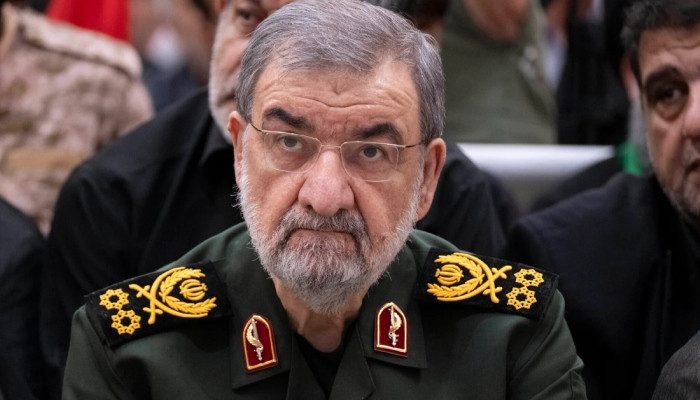
TEHRAN/ANTALYA: Secretary of Iran's Supreme National Security Council Mohsen Rezaei has categorically ruled out transferring any of the country's enriched nuclear material abroad, saying Tehran intends to retain and use all of it for its own purposes. "Even the smallest amount of enriched nuclear material will not be taken out of Iran," Rezaei said in an interview with Al Mayadeen TV broadcast on Wednesday, adding that Tehran has informed its Russian friends that the enriched material would remain in the country and be used by Iran itself.
He explained that Iran needs enriched nuclear material to design and build nuclear-powered ships and submarines. Rezaei further outlined Iran's positions regarding negotiations with the US, stressing that any cessation of hostilities must cover all fronts across West Asia, particularly Lebanon.
He said ending the war on all fronts in West Asia, especially Lebanon, is one of Iran's fundamental conditions. He warned that any new US attack would trigger strikes against the country's military bases, including its distant bases.
The Iranian security chief threatened to strike US bases beyond the Middle East, including in Europe, if they are used for attacks against Iran. "If American aircraft take off from an American military base, even one located in a European country or some other distant region, to bomb Iran, he said, we will strike those bases as well," Rezaei told the Lebanon-based TV network.
He also said that Iran's response to renewed US attacks would "target America's more distant military installations - including the ones we have not yet attacked," without specifying. "We may even strike certain islands that they assume are beyond the reach of our missiles," he added during the interview, which was conducted in Tehran.
Elsewhere in the interview, Rezaei highlighted Iran's advanced military capabilities, particularly in electronic warfare, saying the country has reached a sophisticated level that enables it to take control of American drones and bring them down intact. Meanwhile, Iranian President Masoud Pezeshkian told the COP31 climate conference on Wednesday his country wanted compensation for environmental damage caused by US and Israeli strikes, saying the issue related to global efforts to fight climate change.
"We expect the global community to establish a genuine and meaningful link between climate commitments in times of peace and responsibility in times of war, to document and assess the environmental damages caused by military aggressions and to develop compensation mechanisms," he said.
His comments were part of back-to-back speeches by heads of state on the third day of the two-week conference in Turkey. International climate agreements currently include billions of dollars in wealthy-country finance to help developing countries adapt to climate change and pay for its impacts, but there is no provision covering environmental impacts of military strikes.
The US and Israel launched a military campaign against Iran in late February. The conflict, which spread to Lebanon and the Gulf, has involved repeated strikes on energy infrastructure in Iran and across the wider region, as well as strikes on shipping.
Iran has repeatedly attacked oil tankers navigating the Strait of Hormuz. Those attacks have caused environmental damage, including substantial oil leaks, while the broader conflict may have also led to further ecological disruptions across the region.