
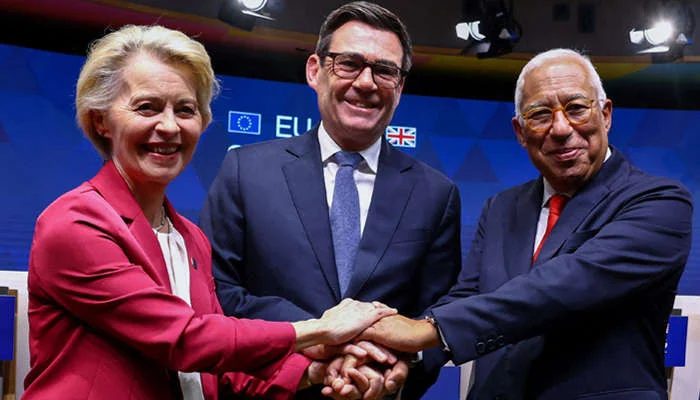
UK Prime Minister Andy Burnham and top EU officials sealed trade and youth mobility deals at a Brussels summit on Friday, November 20, 2026.
- Delegates signed three agreements covering food exports, emissions-trading schemes, and youth mobility.
- The accords aim to provide a twenty-two billion dollar boost to the British economy.
- London and Brussels clashed over linking implementation to British university fee cuts for EU students.
Brussels Summit Agreements
Burnham reenergised talk of closer ties a decade after Britain voted to leave the European Union. A string quintet played the anthems of both sides while the prime minister shook hands with EU chiefs Ursula von der Leyen and Antonio Costa. Wrapped up in Brussels were three main agreements. These included a deal cutting red tape for food exports, another linking the two sides emissions-trading schemes, and a third on a youth experience scheme. Burnham argued that the accords, initiated by his predecessor Keir Starmer, will help fix some of the damage Brexit inflicted and provide a twenty-two billion dollar boost to the British economy. British firms will export to Europe more easily again, and one hundred thousand under-thirties from each side will be allowed to reside for up to three years in each other territory for work, study, or travel.
Tuition Fee Disputes
One potential dampener emerged as the twenty-seven nation bloc and London jostled over linking ultimate implementation of the deals to Britain agreeing to cut university fees for EU students. Both sides cast the day as a win. This is a good day for Britain, and this is a good day for Europe, Burnham told the gathering, hailing a landmark agreement. Von der Leyen called it a turning point in relations. Brussels and London wrangled ferociously down to the wire over the details. A key sticking point was pinning London down to a future agreement on cutting fees for EU students at UK universities to the level paid by their British counterparts. Burnham insisted that the deal is done, even if talks would continue over tuition fees over the next six months.
Future Relations Debate
Since taking power this summer, Burnham has smashed through taboos in Britain debate over relations with Europe, going as far as to float rejoining the bloc one day. European Council boss Costa told Burnham the EU was open to having the closest possible relationship with Britain. The summit focused on smaller steps, and the prime minister kicked the can on what could come next. Having previously said he would like to see Britain rejoin the EU in his lifetime, the former Manchester mayor promised to lay out options ranging from leaving things as they are to entering the customs union or becoming a member again. He trod cautiously at Friday summit, saying only that he would hold an informal brainstorming with the EU over the next year to look at options. The British people will be the boss of what happens next, and officials will not run ahead of public opinion. Burnham hopes friendlier EU relations will help build a broad centre-left coalition to win the next general election, not anticipated until 2029. Polls regularly indicate most Britons regret Brexit and would vote to re-enter the bloc if a referendum was held tomorrow. The strategy also reflects Britain weak economy and how much the world has changed since 2016, with Europe firmly behind Ukraine in its war against Russian aggression. The strategy comes with huge risks because his own party is divided on how to proceed. The push leaves him open to accusations of Brexit betrayal from the opposition Conservatives and the hard-right Reform UK party of Nigel Farage. Naive Andy Burnham has gone to Brussels and been hit by the stark reality I have warned about for decades, Farage wrote on X.