
On Tuesday, November 3, four passenger flights were targeted by suspected bomb threats, prompting urgent security inspections at airports in Poland, Spain, Bulgaria, and Italy. Authorities confirmed that no explosives were found in any of the incidents, and all passengers remained safe throughout the ordeal.
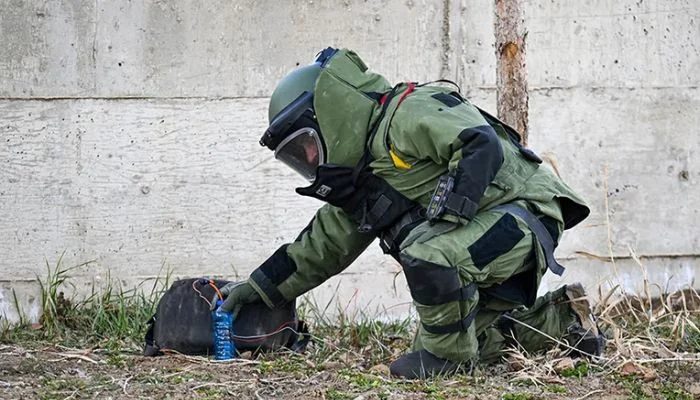
A LOT Polish Airlines flight traveling from London Heathrow to Warsaw Chopin was diverted to Warsaw Modlin Airport following a report of an explosive device on board. The Boeing 737 MAX 8, carrying 181 people, landed safely at approximately 10:01 a.m. Bomb disposal teams immediately inspected the aircraft and luggage, and the airport was temporarily closed as a precautionary measure before resuming normal operations.
In Spain, a Ryanair flight from Manchester to Murcia landed as scheduled, where it was met by police and a bomb disposal unit. The Civil Guard conducted a thorough search and ruled out the presence of explosives, allowing the airport to resume activity shortly thereafter.
A Scandinavian Airlines flight from Copenhagen to Warsaw was also inspected following a similar threat. Meanwhile, Bulgarian media reported that a plane arriving from Israel was diverted to Sofia Airport after an email threat was received.
The situation remained tense as security protocols were activated across multiple borders. In Italy, two Ryanair flights arriving at Rome Fiumicino from Lisbon and Dublin were searched following anonymous tips.
The flight arriving from Dublin was escorted by the Italian Air Force as a standard security procedure during such alerts. No group has claimed responsibility for the coordinated threats thus far.
However, Polish officials have warned that the country is facing a major escalation in what they describe as Russia's hybrid war campaign against NATO allies. Polish counter-terrorism police were deployed near the Russian exclave of Kaliningrad on Monday following intelligence warnings of potential sabotage or an armed incursion.
These units are currently working alongside the army, border guards, and national intelligence services to maintain regional stability. While airports have resumed normal operations, passengers are strongly advised to check their flight status with their respective airlines before traveling.
The disruption caused significant delays for thousands of travelers across the European continent. Authorities have requested that anyone with information regarding the origin of these threats contact them immediately.
Investigations are ongoing, with international cooperation between European intelligence agencies to identify the source of the anonymous tips. The incident highlights the growing concerns regarding security vulnerabilities in civil aviation and the potential for digital threats to disrupt international travel infrastructure.
Security experts suggest that these incidents may be part of a broader strategy to test the response times and coordination of European security forces.