
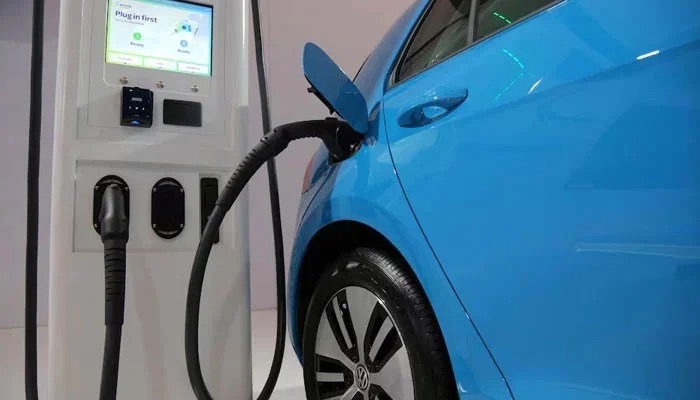
The government's favourable tax and duty treatment for New Energy Vehicles (NEVs), including a flat 1 percent sales tax regime, could cost the national exchequer an estimated Rs150 billion annually in foregone revenue, according to Abdul Rehman, former chairperson of the Pakistan Association of Automotive Parts and Accessories Manufacturers (PAPAAM). Rehman said annual NEV sales can reach around 50,000 units, with the average reduction or subsidy in duties and taxes amounting to approximately Rs3 million per vehicle, taking the implied annual revenue concession to around Rs150 billion. He said this is not a minor policy incentive but a significant fiscal decision, as the government is willing to forego this sum in potential revenue at a time when every additional rupee of taxation is being sought elsewhere.
Rehman acknowledged that Pakistan needs an electric vehicle transition, citing cleaner transportation, reduced fuel imports, lower emissions and the development of a domestic EV industry as legitimate national objectives. However, he argued there is nothing inherently progressive about subsidising an expensive private vehicle. He said that if the government has fiscal space equivalent to Rs150 billion to accelerate electric mobility, there are alternative uses that could benefit a far larger section of society, including electric buses, charging infrastructure, electric motorcycles and rickshaws, and public transport systems.
The scale of the disparity becomes particularly striking when placed against the government's education spending. For FY2025-26, the Higher Education Commission (HEC) has been allocated approximately Rs35 billion, while the estimated annual fiscal concession associated with 50,000 NEVs could be around Rs150 billion, more than four times the HEC allocation. He said one policy potentially sacrificed four times the amount allocated to higher education while benefiting a relatively small number of vehicle purchasers.
Rehman concluded that if the objective is industrial development, there should be clear requirements for localisation, investment and employment. If the objective is mass adoption of electric mobility, incentives should reach consumers who currently depend on motorcycles, rickshaws and public transportation, not primarily those already capable of purchasing high-value cars. Good policy, he noted, is not simply about choosing the right technology, but about targeting public resources where they produce the greatest economic and social return.