
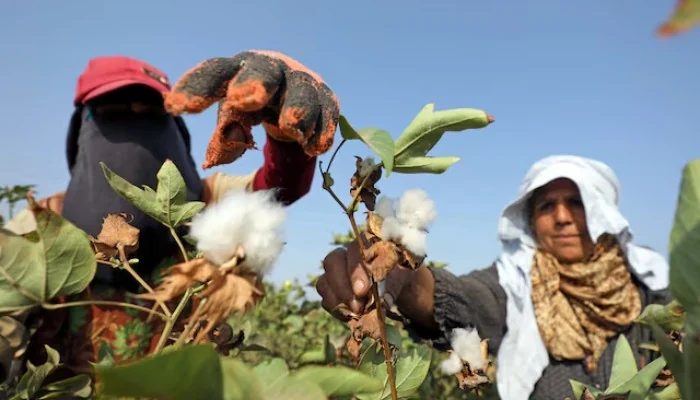
The national cotton crop has failed year after year, and the 2026 season is following the same pattern, with no end in sight. The prolonged decline in cotton production and the worsening quality of seed have a shared root cause: insufficient support for research institutions.
Until over a decade ago, Pakistan produced more than 14 million bales of cotton. Production now stands at roughly five million bales - about one-third of its peak.
The impact is felt across the value chain: growers face losses season after season, while export-focused textile mills must import nearly $3 billion worth of cotton annually to keep their machinery operating. Meanwhile, farmers report poor-quality seed, low germination rates, and varieties that fail to withstand pests, heat, and water stress.
These are not separate crises; they are closely connected. When research lacks funding, staffing, and strong leadership, seed quality suffers.
As seed quality declines, so does output. Lower production drives up imports, puts pressure on mills, and erodes farmers' confidence in cotton.
Behind this decline sits an institution that was meant to prevent it. The Pakistan Central Cotton Committee (PCCC) is collapsing, and the government has not decided what to do about it.
In laboratories across Multan and Sakrand, research continues against all odds. Experimental fields are still sown and improved varieties are still developed.
But the apex body has had no permanent head for over a decade, and recruitment and promotions have been frozen for 15 years. Only one of seven permanent director positions has been filled in the past 8 years.
Its remaining scientists have spent months working without regular salaries or pensions. Yet the research pipeline has not entirely failed.
CCRI Sakrand developed the CRIS-682 variety, which now covers an estimated 50-55 percent of Sindh's cotton acreage. In Punjab, CCRI Multan's CYTO variety was cultivated across hundreds of thousands of acres this season.
These results contradict the popular claim that PCCC produces nothing. The uncomfortable reality is that the institution keeps delivering despite being starved of funds.
The root of the crisis is the funding model. The PCCC depends on a cotton cess of Rs 50 per bale, a rate unchanged since 2012.
Had the Economic Coordination Committee's 2011 indexation formula been implemented, the cess would today stand at Rs 142.80 per bale. Over 60 textile mills challenged the levy in court after 2016.
The PCCC won most cases, but unpaid dues have crossed Rs 2.5 billion. A July 2025 memorandum signed between the Ministry of National Food Security and Research, the PCCC, and the All Pakistan Textile Mills Association (APTMA) to clear Rs 2 billion in four instalments has not been implemented.
The PCCC is therefore trapped in administrative limbo between three options that nobody has pursued. The first is prolonged limbo - maintaining the status quo of underfunding and vacant posts.
The second is a January 2025 Cabinet Committee on Rightsizing decision to merge the PCCC into the Pakistan Agricultural Research Council, which remains unexecuted. The third is handing operational control to APTMA, its own principal debtor, under an independent board framework proposed in meetings chaired by the Deputy Prime Minister in late 2025.
Scientists argue for a fourth option: reviving the PCCC as an independent, properly funded body. That requires collecting the rightly valued cess through the Federal Board of Revenue (FBR).