
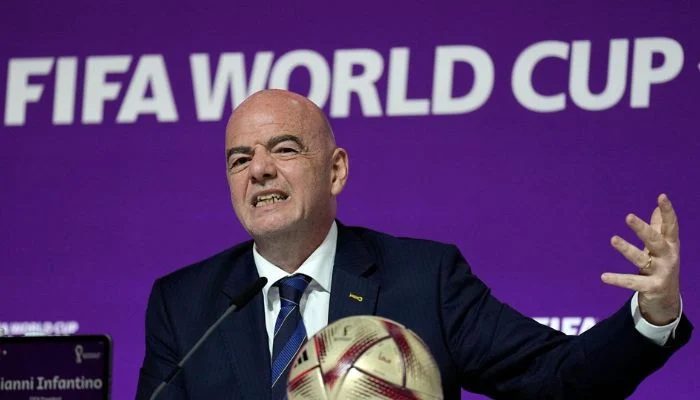
FIFA President Gianni Infantino has come under intense scrutiny following revelations that he received an additional $1.7 million payment from a company involved in organizing the 2026 World Cup. This significant sum was notably absent from FIFA's official annual financial report, sparking concerns regarding transparency and corporate governance within the world's governing body for football.
The payment was uncovered through U.S. tax filings submitted by FWC2026 US Inc., the entity specifically tasked with managing tournament arrangements and logistics within the United States. These documents indicate that Infantino received these funds during the 2024 fiscal year, a payment that was entirely separate from his standard salary and established benefits package.
According to FIFA's own annual report, the president's official salary is listed as 4.274 million Swiss francs, which is approximately $5 million annually. The discovery of the 'top-up' payment, which was not disclosed in the public-facing financial statements, has raised eyebrows among football stakeholders and financial analysts alike.
Former FIFA governance official Miguel Maduro has publicly stated that such a substantial payment should have been declared to ensure accountability. Maduro has formally called for an independent investigation into the matter to determine whether internal protocols were bypassed or if the omission was a deliberate attempt to obscure the president's total compensation.
In response to the growing controversy, FIFA has categorically rejected any allegations of illegality. The organization asserts that the payment was properly reported to U.S. tax authorities and maintains that all compensation packages for senior officials are determined by an independent compensation subcommittee, ensuring adherence to standard corporate practices.
Despite these assurances, critics argue that the lack of transparency remains a critical issue. FIFA's own internal rules mandate strict transparency regarding the compensation of senior officials.
The omission of this payment from public reporting contradicts the organization's stated commitment to reform and ethical conduct. Gianni Infantino, who has faced recurring criticism over governance issues throughout his tenure, finds himself in a precarious position.
This latest controversy arrives at a sensitive time as he prepares for the 2027 presidential election, where he seeks to secure another term as the head of global football. The incident has reignited debates about the culture of secrecy that has historically plagued the organization.
Observers note that while the payment may be legal under U.S. tax law, the failure to disclose it to the FIFA membership and the public undermines the trust that the organization has been trying to rebuild over the past several years.
As the situation develops, pressure is mounting on the FIFA Ethics Committee to provide clarity on why this specific payment was excluded from the annual report. Whether this will impact Infantino's standing among member associations remains to be seen, but the optics of the situation are undeniably damaging.
Ultimately, the case highlights the ongoing tension between FIFA's administrative operations and its public accountability obligations. As the 2026 World Cup approaches, the focus on financial integrity will likely intensify, placing Infantino and his executive team under a microscope for the foreseeable future.