
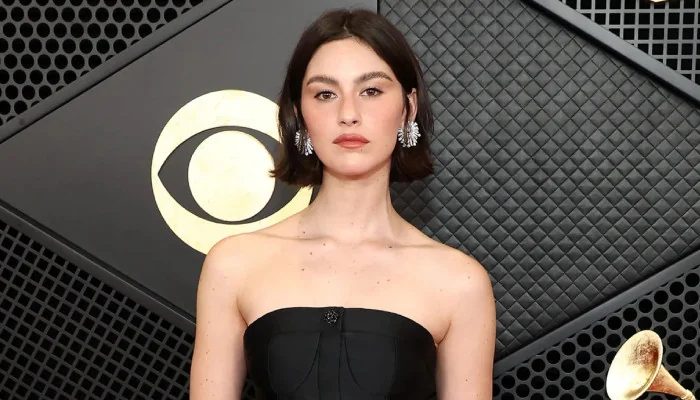
Gracie Abrams sparked a social media debate with her recent appearance at the WYouth Launch event, as fans argued she looked "unhealthily skinny" despite her naturally petite frame. The 25-year-old pop star reopened the conversation about the "Ozempic epidemic" in Hollywood, a topic that also surrounded Ariana Grande earlier this year.
Social media users expressed concern for the singer, comparing her recent and old pictures side-by-side. One user noted, "I thought throughout the 2010s we've had conversations and awareness regarding women being too thin.
No hate to her, but I mean in Hollywood in general and now more and more artists look so thin." Another added, "Do these people get their souls drained or something?" and "This is crazy..." More penned, "Someone take away Ozempic from Hollywood ASAP," and "This makes me so sad," while one defended her, noting, "Gracie has always been super slim, it's just the angle that's making her look different."
The ongoing discourse highlights a broader cultural scrutiny faced by female public figures regarding body image. While critics and concerned fans often point toward rapid weight loss trends linked to pharmaceutical treatments like Ozempic, supporters emphasize that natural body types and camera angles are frequently misjudged by the public eye.
Industry analysts point out that Hollywood has long struggled with unrealistic beauty standards, oscillating between pressures for extreme thinness and sporadic body-positivity movements. The scrutiny faced by Abrams and Grande demonstrates how quickly public perception can shift toward speculation about celebrities' health and lifestyle choices.
Representatives for Gracie Abrams have not yet issued an official statement regarding the online commentary. Meanwhile, discussions across platforms like X (formerly Twitter) and TikTok continue to polarize fans, with many urging a more compassionate and less invasive approach to discussing celebrities' physical appearances.
As the conversation persists, experts in media psychology note that viral body-shaming or constant speculation can have detrimental effects on both the artists and young impressionable fans who consume such content daily. The debate serves as yet another reminder of the intense pressures inherent in contemporary celebrity culture.