
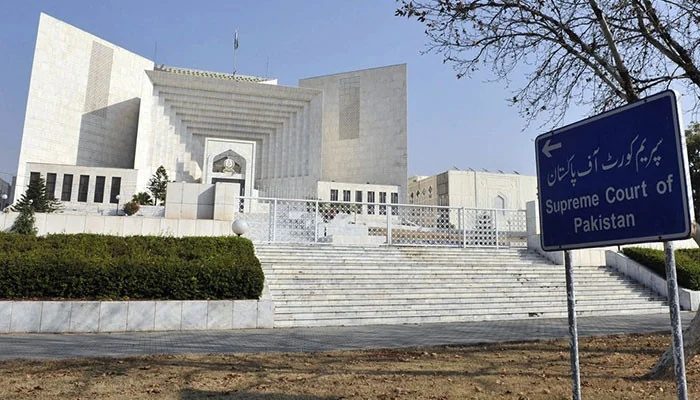
The Supreme Court ruled on November 18 that heirs' inheritance rights did not expire with time, overturning a 2013 Peshawar High Court order.
- Inheritance share vested immediately on death.
- Limitation period began only after denial was communicated.
- Authorities must obtain NADRA records and notify all heirs before mutation.
Court Findings
A five‑member larger bench headed by Justice Shahid Waheed delivered the judgment. The bench included Justices Naeem Akhtar Afghan, Aqeel Ahmed Abbassi, Shakeel Ahmed and Miangul Hassan Aurangzeb. The court issued its decision in scores of appeals against the Peshawar High Court order dated June 3, 2013.
Justice Shahid Waheed authored a 106‑page judgment that stated an inheritance share vested in the legal heir immediately upon the death of the property owner. The court ruled that inheritance rights could not be extinguished by silence, delay or an oral relinquishment. It fixed the limitation period for filing an inheritance claim at six years, beginning from the date when the right was clearly denied.
Implementation Directives
The court directed all provinces and other areas to ensure that no inheritance mutation was attested without (a) a family registration record issued by the National Database and Registration Authority or equivalent proof of all heirs, (b) written notice to every heir shown in the record, including female heirs at their own address, and (c) a recorded statement of any heir who received less than his or her share.
Before attesting any gift, sale, relinquishment or settlement mutation of inherited land, the revenue officer had to record the heir's personal appearance, identity and a statement that the heir was informed of the precise share. For a female heir, the officer recorded the statement in the presence of a woman revenue officer where available.
The court ordered that registering authorities, development authorities, cantonment boards and cooperative housing societies could not transfer property on the basis of inheritance except upon a succession certificate, letters of administration or a decree, and that they must give written notice to all heirs before effecting the transfer.
Settlement officers in areas under first settlement, including the merged tribal districts, had to record all heirs according to Shariah and give them notice of objection proceedings. Trial courts, where limitation was pleaded in an inheritance suit, had to frame the issues listed above, decide them on evidence and endeavour to decide such suits expeditiously.
The judgment commended the Legislature and the Law and Justice Commission of Pakistan to consider (a) a requirement that any relinquishment, settlement or takharuj of an inherited share be effected by a registered instrument executed after the heir was informed of his share, and (b) a specific article in the Limitation Act, 1908, fixing the period and its starting point, together with an outer long‑stop running from an open transfer for value with delivery of possession.
The court directed its office to place all the case before the appropriate benches for decision on merits and to transmit a copy of the judgment to the Secretary, Ministry of Law and Justice, the law secretaries of all provinces, the Attorney‑General for Pakistan, the Advocates General of all provinces and the Islamabad Capital Territory, and the Secretary, Law and Justice Commission of Pakistan for necessary action.
"We end where we began. Can we stop the clock on an inheritance claim? We can, and the law does, but only when the heir has been told, by an act that cannot be mistaken, that her share is denied, and has then let six years pass," the judgment read. "Until that moment the clock has not started, and no court may pretend that it has."