
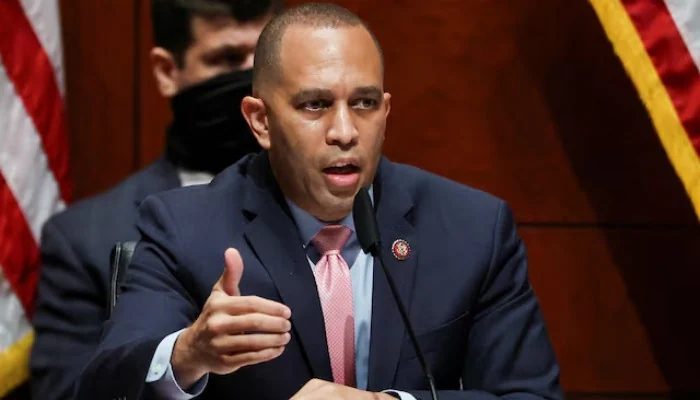
Democratic Leader Hakeem Jeffries is on the cusp of making history as the nation's first Black Speaker of the House, marking a generational shift in US politics after Democrats secured majority control of the chamber in the midterm elections. Jeffries faces a vote from his colleagues when the new Congress convenes on 3 January.
If nominated and elected, as expected, it would be the first time a Black lawmaker has grasped the powerful House speaker's gavel - a position second in line to the presidency and the only leadership role in Congress mandated by the US Constitution.
His rise to the speakership at the Capitol, which enslaved African Americans helped build, would be a milestone more than 150 years in the making, tracing a historical arc that began during the post-Civil War Reconstruction era. Political analysts suggest that Jeffries' leadership represents a strategic pivot for the Democratic Party.
By positioning a younger, charismatic leader at the helm, the party aims to bridge the gap between traditional establishment politics and the demands of a diverse, modern electorate. The transition is viewed as a significant departure from the long-standing leadership styles that have dominated the chamber for decades.
The legislative agenda under a potential Jeffries speakership is expected to focus heavily on voting rights, economic equity, and criminal justice reform. These issues remain central to the party's platform, especially as the nation grapples with deep-seated social divisions.
Supporters argue that his background as a lawyer and his experience in the House leadership have prepared him to navigate the complex legislative hurdles ahead. However, the path to the speakership is not without its challenges.
Jeffries will need to maintain a unified front within a caucus that holds diverse ideological views. The narrow majority secured by the Democrats means that every vote will be critical, requiring a high degree of consensus-building and negotiation skills to pass major legislation.
The symbolic weight of this potential appointment cannot be overstated. For many, seeing a Black man hold the gavel in a building constructed by enslaved laborers serves as a powerful testament to the progress of American democracy.
It reflects a long, arduous journey toward equality that continues to evolve in the 21st century. As the 3 January deadline approaches, the political atmosphere in Washington remains charged with anticipation.
Both allies and opponents are closely watching the internal dynamics of the Democratic caucus. The outcome of this vote will not only define the leadership of the House but also set the tone for the legislative priorities of the upcoming session.
International observers are also monitoring the situation, as the US House Speaker plays a pivotal role in shaping foreign policy and international relations. A shift in leadership could signal changes in how the US engages with global partners and addresses international crises.
Ultimately, the elevation of Hakeem Jeffries would be a defining moment for the Democratic Party and the nation at large. It underscores a commitment to representation and inclusivity, signaling that the halls of power are becoming more reflective of the country's demographic reality.
As the nation prepares for this transition, the focus remains on the legislative work that lies ahead. Whether or not the expected outcome materializes, the conversation surrounding leadership, diversity, and the future of American governance has been permanently altered by this historic candidacy.